Hiking Patrols: Tactical Strategies for Safe Exploration
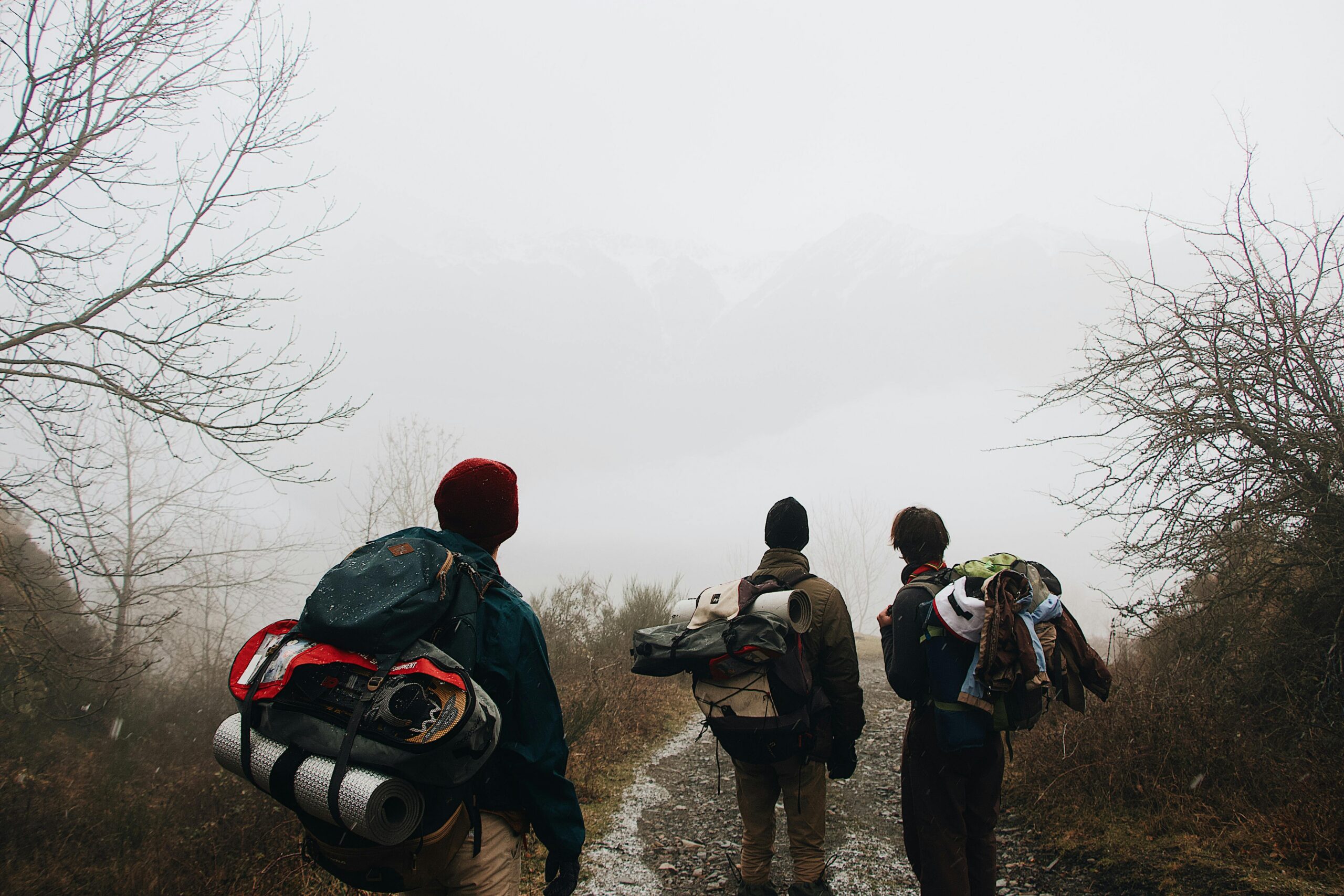
FIELD BRIEFING: FIELD BRIEFING: In the field, a hike isn’t just a walk—it’s a patrol. Whether you are scouting a new trail or conducting a routine perimeter check, hiking patrols: tactical strategies for safe exploration are designed to keep you moving efficiently while minimizing environmental risk. Most…
FIELD BRIEFING: In the field, a hike isn’t just a walk—it’s a patrol. Whether you are scouting a new trail or conducting a routine perimeter check, hiking patrols: tactical strategies for safe exploration are designed to keep you moving efficiently while minimizing environmental risk. Most hiking accidents occur due to a “Casualty of Confidence”—the moment an operator stops treating the trail with tactical respect and transitions into a casual mindset.
In 2026, safe exploration requires a blend of physical discipline, group cohesion, and high-performance gear. This briefing outlines the 8 pillars of the “Patrol Doctrine” to ensure your squad reaches the extraction point without compromise.
1. The Pace-Setter Protocol: Squad Cohesion
In group operations, the speed of the patrol is dictated by the slowest member. Splitting the group is a primary “Failure Point” that leads to lost operatives and communication breakdowns.
- Point Position Dynamics: Place the least experienced or slowest hiker second in line. This allows the LeadScout to set a sustainable pace while keeping the “Tail” (the rear of the line) from being left behind. By sandwiching the slower operative between two experienced scouts, you ensure their safety is monitored at all times.
- The “L-Shaped” Break: Every hour, execute a 5-to-10-minute “Sustainment Stop.” Do not wait until you are exhausted to hydrate or fuel up. These breaks are for more than rest; they are for conducting “Gear Checks” and “Hot-Spot” (blister) mitigation. Check out our Sustainment System Briefing to learn how to optimize your trail nutrition.
2. Terrain Sighting and Ground Intelligence
Maintaining situational awareness means scanning beyond the path in front of your boots. You must actively look for “Ground Intelligence” that indicates shifting hazards or biological presence.
- Hazard Identification: Scan for loose shale, wet roots, or unstable “river-rock.” If the terrain shifts to a “Black Route” (steep, high-exposure, or technical), stop the patrol. Reassess your squad’s ability to extract safely before proceeding.
- Biological Indicators: Identify animal tracks or scat on the trail. If you find fresh predator sign, increase your “Audio Deterrence” (periodic call-outs) to avoid a surprise encounter in thick brush.
3. The “Base Commander” Tool: Black Diamond Pursuit Trekking Poles
For 2026, we recommend the Black Diamond Pursuit Trekking Poles as a mandatory “Stability Augmenter.” These are not just walking sticks; they are specialized tools for hiking patrols: tactical strategies for safe exploration.
- Kinetic Management: These poles save your knees during steep descents by absorbing up to 25% of the impact force. They allow you to maintain your “Patrol Rhythm” for longer durations by distributing the workload to your upper body.
- Multi-Role Capability: In a survival scenario, these poles serve as the primary “Center Pole” for emergency tarp shelters. Their ergonomic grips reduce hand fatigue, ensuring you retain the manual dexterity needed for “Knot-Work” or “Navigation Tasks” at the end of a long march.
4. Rucksack Distribution and “Load-Carrying” SOPs
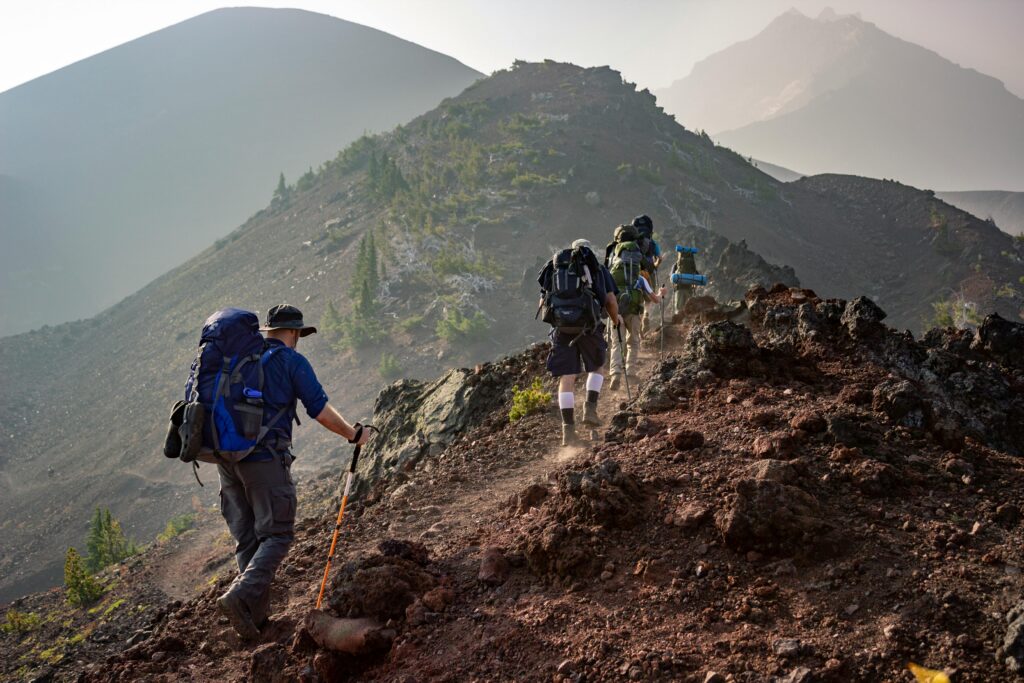
A poorly packed bag is more than a nuisance; it is a tactical liability that shifts your center of gravity and leads to premature fatigue and muscular skeletal stress. Professional hiking patrols: tactical strategies for safe exploration prioritize “Load Neutrality” to ensure the rucksack moves as an extension of the body rather than a weight fighting against it.
- The High-Center Rule: Position your heaviest items—such as your hydration bladder, bear canister, or climbing hardware—close to your spine and centered between your shoulder blades. By keeping the mass near your natural center of gravity, you prevent the pack from “pulling” you backward. This ensures your “Patrol Balance” remains stable during high-stakes maneuvers like technical stream crossings or narrow ridge traverses where a single stumble could be catastrophic.
- Symmetry Check and Lateral Stability: Ensure the weight is distributed equally between the left and right sides of the pack. An unbalanced load causes “Gait Imbalance,” forcing your core and hips to overcompensate. Over a 10-mile patrol, this leads to significant joint inflammation and localized fatigue that can compromise your ability to react to sudden terrain shifts.
5. Navigational “Check-Points” and Handrails
Never hike “blind” or become over-reliant on a digital cursor. Use the physical terrain to verify your position every 30 minutes to maintain “Spatial Certainty.”
- The Handrail Technique: Identify distinct, linear features such as ridgelines, rivers, or valley floors to use as “Handrails.” These serve as parallel markers that keep you oriented toward your objective even if you lose the physical trail. If you know the river is always to your East, you can never be truly lost.
- Back-Azimuth Planning (The Reverse Recon): Terrain looks drastically different when viewed from the opposite direction. Periodically stop and look behind you to memorize the “Return View.” This “Reverse Recon” is a vital part of your weather strategy; if a storm forces a rapid retreat, you will recognize the landmarks required for a smooth extraction back to the trailhead.
6. Micro-Climate Management (The “Be Bold, Start Cold” Rule)
In the field, sweat is the primary enemy of thermal stability. Once your base layer is saturated, your body’s ability to regulate its “Heat Core” is compromised. Proactive layer management is a foundational skill in hiking patrols: tactical strategies for safe exploration.
- Venting SOPs and Metabolic Heat: If you feel a “Hot-Spot” of perspiration building on your back or under your arms, stop and shed a layer immediately. The “Be Bold, Start Cold” doctrine suggests you should begin your hike feeling slightly chilled. Within 10 minutes of movement, your metabolic output will bring you to the optimal “Cruising Temperature” without soaking your clothes.
- The “Stop-Layer” Discipline: Your heart rate drops rapidly during a break. The moment the patrol stops for more than 5 minutes, you must put on your “Static Layer” (puffy jacket) to trap your existing body heat. Do not wait until you feel a chill; by then, your core temperature has already begun to drop, making it harder to re-warm once the patrol resumes.
7. Stream Crossing and Aquatic Hazards
Moving water is one of the most powerful and unpredictable forces you will encounter. Stream crossings represent a high-consequence phase of any patrol where gear and personnel are at maximum risk.
- The “Unbuckle” Protocol: Before entering any water deeper than your knees, you must unbuckle your rucksack’s waist belt and sternum strap. This is a life-saving SOP: if you lose your footing and are swept into the current, your pack will act as an anchor, potentially pinning you against submerged rocks. You must be able to jettison the load immediately to regain buoyancy.
- Three-Point Contact Mechanics: Use your Trekking Poles to maintain three points of contact with the riverbed at all times. Move only one “limb” (a foot or a pole) at a time, ensuring your next anchor point is stable before shifting your weight. This “Tripod Stability” is the only way to navigate slick, moss-covered stones in a fast-moving current.
8. The “No-Trace” Stealth Doctrine
A tactical patrol leaves the environment exactly as they found it. This is not merely an ecological preference; it is about “Signature Management”—denying any observer or predator the knowledge of your presence and route.
- Perimeter Integrity and Human Footprint: Pack out every scrap of trash and avoid disturbing natural ground cover or breaking low-hanging branches. By minimizing your “Human Footprint,” you reduce the likelihood of attracting curious wildlife to your route and ensure that your “Mission Signature” remains invisible to anyone following the trail.
- Sound Discipline and Environmental Intel: Keep vocalizations to a “Functional Level” only. Excessive chatter is a tactical distraction that prevents the squad from hearing “Environmental Intel”—the snap of a branch, the change in wind speed, or the distant rumble of a storm. In the wild, your ears are as important as your eyes for maintaining 360-degree situational awareness.
Final Debrief: Respect the Trail
Hiking patrols: tactical strategies for safe exploration are about maintaining the “Scout Mindset.” By pacing your squad, using stability tools, and maintaining situational awareness, you ensure that every mission is a successful one.
Maintain the Pace. Scan the Ground. Stay Ready.
"Observe, orient, decide, and act."