8 Fire Safety Protocols for Tactical Campers: Rules of Engagement
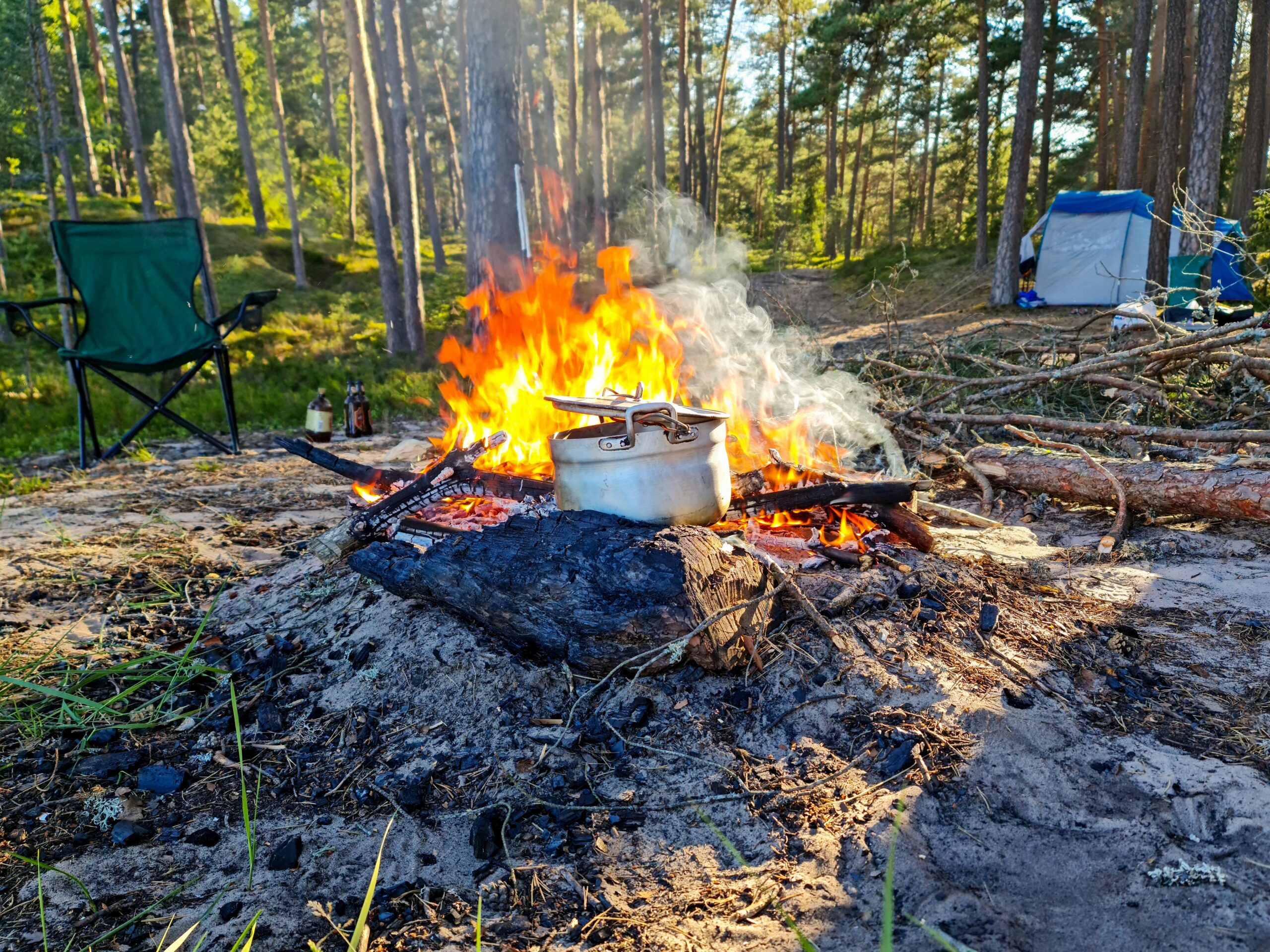
FIELD BRIEFING: FIELD BRIEFING: Fire safety protocols for tactical campers are the critical rules that prevent a primary source of comfort from becoming a landscape-level disaster. In 2026, wildfire risks have reached an all-time high; a single errant spark can compromise thousands of acres and trigger an…
FIELD BRIEFING: Fire safety protocols for tactical campers are the critical rules that prevent a primary source of comfort from becoming a landscape-level disaster. In 2026, wildfire risks have reached an all-time high; a single errant spark can compromise thousands of acres and trigger an emergency extraction. Mastering “Fire Discipline” is the mark of a professional woodsman who understands that fire is a tool to be managed, not a force to be left unchecked.
1. The 10-Foot Clear Zone: Establishing the Fire Break
Before you ever strike a spark or ignite a stove, you must establish a mechanical “Fire Break.” In a tactical context, this is your primary defense against “Creeping Fires”—slow-moving ignitions that travel through the “Duff” layer of the forest floor. Without a clear zone, a fire can move undetected beyond your immediate perimeter, leading to a catastrophic “Out-of-Control” event.
- Mineral Soil Excavation and Sub-Surface Safety: Clear all organic debris—including dry leaves, pine needles, and decomposing grass—within a 10-foot radius of your central fire pit. It is not enough to simply sweep the surface; you must dig down until you reach the “Mineral Soil” (the light-colored dirt layer containing zero organic matter). This step is vital to ensure the fire cannot “creep” underground through root systems or dense peat. Sub-surface fires can smolder invisibly for days, traveling under your fire ring only to erupt into a surface fire hours after you have extracted from the AO.
- Vertical Clearance and Convective Heat: Evaluate the “Ladder Fuels” above your intended site. Ensure there are no low-hanging branches or dried-out foliage within 15 feet of your fire. Because heat rises via convection, a small fire can rapidly dry out the overhead canopy, turning a “Low-Impact” campfire into a localized “Crown Fire” that is nearly impossible to extinguish with standard camp tools.
2. The Drown-and-Stir SOP: Total Extinguishment
A fire is only considered “Tactically Dead” when it has reached thermal equilibrium with the surrounding environment—meaning it is cold to the touch. Many beginners make the fatal mistake of walking away once the visible flames have died, but buried coals acts as “Heat Batteries” that can retain temperatures exceeding 1,000°F for several hours if left insulated by ash.
- The Drown Phase and Thermal Shock: Begin by pouring water over the entire pit until all audible hissing and steam production ceases. Do not simply splash the surface; you must use enough volume to saturate the entire bed of coals and “Shock” the embers out of their combustion state. This prevents the “Heat Core” from reigniting once you stop monitoring the site.
- The Stir and Expose Phase: Use a tactical shovel or a sturdy stick to aggressively stir the ashes, rotating the bottom-level embers to the surface. This mechanical agitation ensures that no “Dry Pockets” remain hidden under the wet ash.
- The “Hand-Touch” Verification Protocol: Continue to apply water and stir the mixture until you can comfortably stick your bare hand into the saturated ash and hold it there. If the ash feels warm or if steam is still rising, the mission is not complete. If it is too hot for your hand, it is still hot enough to ignite a forest fire; keep pouring until the temperature is neutralized.
3. The “Base Commander” Tool: Solo Stove Bonfire 2.0
To uphold fire safety protocols for tactical campers, we recommend the Solo Stove Bonfire 2.0 as your primary “Hard-Point” fire system.
- Secondary Combustion: This “Smokeless” fire pit utilizes a double-wall design to trigger secondary combustion. This burns wood more efficiently and—most importantly—contains nearly all embers and sparks within a stainless steel drum.
- Zero-Scar Operations: The Bonfire 2.0 keeps the heat off the ground, leaving zero burn scars on the earth. This is a primary requirement for Leave No Trace operations in sensitive AOs where protecting the soil integrity is a mission priority.
4. The “One-Match” Efficiency Drill: Minimizing Volatility
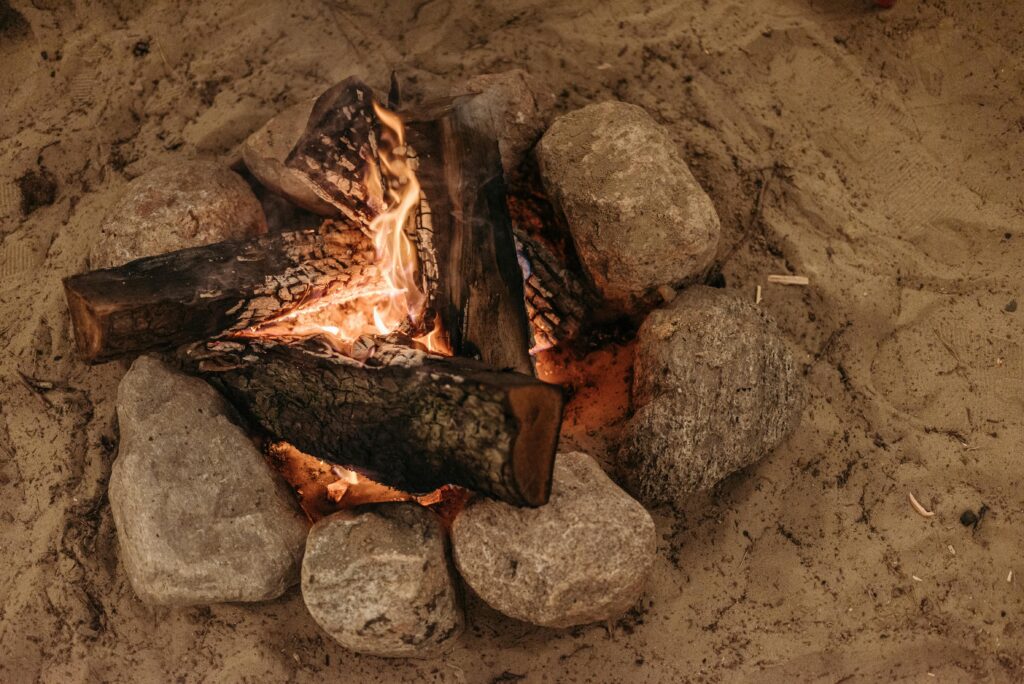
A tactical camper does not waste fuel, nor do they tolerate unnecessary smoke signatures. Your fire safety protocols for tactical campers should prioritize the “One-Match” standard, which minimizes the time a fire spends in a smoldering, volatile state where sparks are most likely to escape.
- Precision Tinder Grading: Before introducing a flame, organize your fuel into three distinct “Tiers”: Tinder (fibrous, high-surface-area materials like fatwood shavings or dry grass), Kindling (pencil-thin sticks and twigs), and Fuel (thicker logs). Proper grading ensures a consistent climb in temperature, preventing the fire from “stalling” and producing excess smoke.
- The “Bird’s Nest” Core: Construct a dense, hollow core of tinder—resembling a bird’s nest—to house your initial spark. By concentrating the heat in a centralized pocket, you ensure a high-intensity ignition that consumes the wood completely. This rapid combustion significantly reduces the production of “Aerosolized Embers” (lightweight sparks) that can drift on thermal updrafts and bypass your 10-foot clear zone.
5. High-Wind “Hard-Stop” Protocols: Managing Wind Shear
Weather is the most volatile variable in fire safety. You must have the operational discipline to recognize when the “Environmental Load” has made an open flame a tactical liability. Wind can transform a controlled campfire into a wildfire in seconds by projecting sparks across vast distances.
- The 15-MPH Safety Threshold: If local wind gusts are consistently hitting 15 MPH or higher, you must execute a “Hard-Stop” on all open wood fires. In these conditions, wind shear can carry sparks over a quarter-mile, rendering even the most meticulously cleared fire pits useless. Monitoring wind speed is a core part of your Weather Logistics Briefing.
- Pressurized Stove Alternatives: During high-wind events, switch your “Sustainment Ops” exclusively to a pressurized canister stove (like a Jetboil or MSR PocketRocket) used with a dedicated metal windscreen. These systems offer a “Contained Flame” that eliminates the risk of flying embers and can be extinguished instantly with a single turn of a valve.
6. Siting the “Fire-Pit” for Tactical Shelter Protection
The spatial relationship between your fire and your bivvy is a matter of both equipment longevity and personal safety. Radiant heat is a powerful force that can easily melt high-tech, synthetic “Hardshell” fabrics or expensive sil-nylon tent flies from a distance.
- The 15-Foot Downwind Offset: Always establish your fire pit at least 15 feet downwind from your tent, tarp, or gear cache. This protects your high-value assets from “Pin-Hole” burns caused by stray sparks and prevents the accumulation of soot on your sleeping gear.
- Convective Flow and “Fishtailing” Awareness: Actively observe local wind patterns before pitching. If the wind is swirling or “fishtailing” due to nearby topography, increase your offset distance to 20 or 25 feet. Ensuring your “Sleep System” is upwind of the smoke and embers is critical for both respiratory health and fire safety.
7. The “Water-on-Standby” Requirement: Immediate Suppression
Never ignite a fire without having your “Suppression Tools” staged and ready for immediate deployment. This is a non-negotiable rule of fire safety protocols for tactical campers; by the time a fire escapes the pit, it is too late to go looking for water.
- The Ready-Reserve Reservoir: Keep a minimum of 2 gallons of water in an open-top container or a dedicated fire-extinguishing blanket within arm’s reach of the fire ring. If a spark lands outside the clear zone, you must be able to douse it within seconds to prevent “Flash Ignition” of surrounding dry fuels.
- The Shovel Anchor Protocol: Stake a folding tactical shovel into the ground directly next to the fire pit. Soil is an elite suppressant for small flare-ups and is highly effective at “Smothering” escaped embers by cutting off their oxygen supply before they can ignite the “Duff” layer.
8. Post-Mission AO Sanitization: Signature Management
Once the fire is cold and the mission is terminated, you must sanitize the Area of Operations (AO). In 2026, a professional scout leaves no “Visual Signature” of their presence, protecting both the environment and the secrecy of their route.
- Cold-Ash Dispersion: Once the ashes have passed the “Hand-Touch” test and are fully cooled, scatter them over a wide, inconspicuous area away from your primary campsite. This prevents the buildup of “Ash Piles,” which can unnaturally alter the local soil pH and act as a visual marker for other hikers or curious wildlife.
- The “Soot-Down” Rock Reset: If you utilized local stones to ring your fire, return them to their exact original positions and orientations. Place the “Soot-Side” of the rock face-down against the earth. The ultimate goal is “Total Erasure”—leaving the AO looking as though no human has occupied the space in decades.
Final Debrief: Master the Flame
Fire safety protocols for tactical campers are about more than just preventing a disaster; they are about maintaining the “Operational Integrity” of the wilderness. By using tools like the Solo Stove, maintaining a 10-foot clear zone, and following the Drown-and-Stir SOP, you ensure that your fire remains a life-saving tool rather than a landscape-threatening hazard.
Clear the Zone. Drown the Coals. Stay Ready.
"Observe, orient, decide, and act."