FIELD BRIEFING: Practicing field setup before deployment is how you transition from a “gear owner” to an “operator.” Your backyard or a local park is your “Training Range,” and it is the only place where mistakes are free. You do not want your first time pitching a complex, multi-pole tent or troubleshooting a pressurized stove to be at 9,000 feet in a high-alpine thunderstorm.
In 2026, a tactical scout treats their gear like a weapon system—you must master its assembly, identify its failure points, and ensure you can operate it under extreme environmental stress.
1. The “Blindfold” Shelter Drill: Mastering Zero-Visibility
One of the most effective methods for practicing field setup before deployment is to pitch your primary shelter at dusk or with your eyes closed. In a high-consequence scenario, you may arrive at your coordinates after an exhausting extraction, during a heavy downpour, or under a total “Light Discipline” protocol where white light is prohibited.
- Muscle Memory Protocol: If you cannot feel your way through the pole sleeves, identify the “Head” vs. the “Foot” of the tent by touch, or tension your guy-lines without visual aid, your shelter system is a liability.
- The Drill: Set a timer and attempt to pitch your tent using only a red-light headlamp or no light at all. Focus on the tactile feedback of the “click” when poles seat into grommets.
2. The Stove Cold-Start: Thermal and Fuel Logistics
Modern stoves can be finicky when faced with elevation, wind, or low temperatures. Practicing field setup before deployment must include a deep-dive into your “Sustainment System.”
- Troubleshooting Under Stress: Practice the “Prime and Light” procedures until they are second nature. Learn how your specific stove reacts to high-velocity wind and how to use a windscreen effectively without overheating the fuel canister.
- The Drill: Place your stove and fuel in the freezer for two hours to simulate a sub-zero theater. Attempt to light the stove while wearing gloves to simulate the loss of manual dexterity caused by “Cold-Soak.”
3. The “Base Commander” Tool: Black Diamond Storm 500-R
To facilitate practicing field setup before deployment, having a reliable, hands-free light source is mandatory. For 2026, the Black Diamond Storm 500-R remains the definitive tactical choice for scouts who require a high-output, rechargeable “Lumen Reserve.”
- Night Vision Integrated: This 500-lumen powerhouse features a dedicated “Night Vision” mode with red, green, and blue LEDs. This allows you to manage complex tent poles and stove components without bleaching your natural night vision or alerting every observer in the sector to your coordinates. Using red light is a core component of our Tactical Night Ops SOPs, ensuring you maintain situational awareness in the dark.
- Operational Durability: Built with an IP67 rating, this unit is fully waterproof and dustproof. It is engineered to function perfectly while submerged in 1 meter of water, ensuring it will not fail during the exact high-intensity storms that make rapid field setup a life-saving necessity.
- Power Management: The 500-R is a lithium-ion rechargeable system, allowing you to top off your battery via a power bank during your Navigation and Comms checks. Its “PowerTap” technology allows for instant brightness adjustment, giving you “Full-Spectrum” visibility the moment a gear failure occurs.
4. The “Wet Weather” Tarp Pitch

Tarp systems are the most versatile and lightweight shelters in a scout’s arsenal, but they require the highest level of technical skill to remain viable in a storm. Unlike a freestanding tent, a tarp relies entirely on your ability to read the wind and secure high-tension anchor points.
- The Knot-Work Challenge: Practice tying the Taut-Line Hitch and the Trucker’s Hitch while wearing thin liner gloves. These knots are non-negotiable for maintaining structural integrity in high winds, as they allow you to adjust tension without untying the entire system.
- The Drill: Set up an A-frame tarp shelter while a partner sprays the area with a garden hose to simulate “Driving Rain.” This drill forces you to sequence your setup—securing the ridgeline first to create a “Dry Zone”—so that your sleeping gear and rucksack remain protected while you finish the perimeter stakes.
5. The “Rapid Extraction” Pack-Out
In the event of a forest fire, flash flood, or a persistent predator intrusion, you must be able to break camp and be on the move in minutes. A slow pack-out is a tactical vulnerability that can leave you trapped in a deteriorating “Danger Zone.”
- The 10-Minute Standard: Aim for a “Bug-Out” time of under ten minutes for a full breakdown. This requires a disciplined internal organization where every piece of gear has a dedicated “Home” in your rucksack.
- The Drill: Start a timer while you are zipped inside your sleeping bag. You must exit, deflate your pad, stow your shelter, and secure all “Smellables” (food/trash) into your bear canister. This drill identifies “Gear Friction”—the specific items that are difficult to pack under pressure—allowing you to reorganize your loadout for maximum efficiency.
6. Water Filtration Speed-Test
Dehydration is a “Silent Threat” that causes cognitive decline and poor decision-making. You need a filtration system that is not only fast but consistently reliable under field conditions.
- Flow Rate Maintenance: Practice the “Field Back-Flush” on your filter (such as a Sawyer Squeeze or Katadyn BeFree) using the provided syringe or cleaning coupler. Over time, particulates and “bio-film” will clog the hollow-fiber membranes, reducing your flow rate to a trickle.
- The Drill: Time how long it takes to filter 2 liters of water from a bucket of “dirty” water. If the process takes more than three minutes, your filter is compromised. Mastering the cleaning process in a controlled environment ensures you won’t be frustrated and thirsty on a muddy riverbank.
7. The IFAK “One-Handed” Deployment
Your Individual First Aid Kit (IFAK) is your primary life-support system for traumatic injury. In a real-world emergency, you may be dealing with a limb injury that leaves you with the use of only one hand.
- Tourniquet Application: Practice applying a CAT (Combat Application Tourniquet) to your own arm and leg using only your non-dominant hand. The goal is to achieve “Total Occlusion” (stopping the pulse) in under 60 seconds.
- The Drill: Lie on the ground and attempt to retrieve your IFAK from its stowed position on your rucksack. If you cannot reach the kit or open the “Quick-Tear” zippers one-handed, you must relocate it to a “High-Value Engagement Zone,” such as a belt mount or chest rig.
8. The “Communication Check” Drill
In 2026, satellite messengers like the Garmin inReach are our primary lifeline to the outside world. However, these devices have specific “Line-of-Sight” requirements that you must understand before you are in a deep canyon or under heavy tree canopy.
- Message Verification: Practice sending a “Preset Check-In” and a “Custom Coordinate” message to your safety contact from your training range. This confirms your subscription is active and that your contact knows how to interpret the map link.
- The Drill: Initiate a “Premium Weather Request” on your device and practice interpreting the barometric and wind-speed data. Distinguishing between a “Basic” forecast and a “Marine/High-Altitude” forecast is a critical skill for practicing field setup before deployment, as it dictates whether you stay put or evacuate.
Final Debrief: Train Hard, Camp Easy
Practicing field setup before deployment is the difference between a controlled mission and a chaotic survival situation. By building muscle memory through these 8 drills, you ensure that your gear serves you, rather than the other way around.
Test Your Seals. Burn Your Fuel. Stay Ready.
FIELD BRIEFING: Recon and route planning for weekend missions is the “Intel Phase” of your operation. Beginners often make the mistake of simply following a digital GPS line without understanding the terrain, elevation gradients, or “Emergency Extraction Points.” A tactical scout knows every contour of the path before their boots ever touch the soil.
Effective recon and route planning for weekend missions ensures you aren’t caught in a box canyon during a flash flood or struggling to find level ground for a campsite as the sun sets. In 2026, the delta between a successful mission and a SAR (Search and Rescue) call is the quality of your pre-trip intelligence.
1. Topographic Intelligence: Beyond the 2D Line
A route is more than a simple linear distance; it is a complex series of vertical and horizontal changes that dictate your metabolic burn and specific gear requirements. During recon and route planning for weekend missions, you must view the map as a three-dimensional obstacle course rather than a flat path.
- The Slope Factor (Naismith’s Rule): A 5-mile hike on flat ground is a light walk; however, that same 5-mile stretch with 3,000 feet of elevation gain becomes a grueling mountain mission. Analyze the “Contour Interval” on your map; if the lines are tightly packed, you are facing a steep incline that will likely cut your travel speed by $50\%$ or more. Tactical SOP: For every $1,000$ feet of ascent, add an extra hour to your estimated time of arrival (ETA) to account for the increased physical strain and cardiovascular demand.
- Micro-Terrain Analysis: Identify potential “Terrain Traps” such as narrow gulleys, slot canyons, or heavy scree fields. These high-friction areas are high-risk zones for rockfalls, ankle injuries, or localized flash flooding. These “Danger Zones” should be navigated during peak daylight hours only, as shadows can obscure unstable footing and make vertical navigation significantly more hazardous.
2. Water Sighting and Hydration Logistics
Water is the heaviest component of your loadout (weighing approximately 2.2 lbs per liter), but it is also the most vital. When executing recon and route planning for weekend missions, you cannot afford to guess where your next resupply point is; you must have “Confirmed Intel” on every source.
- The Seasonal Variable: Identify “Water Resupply Points” on your map, but treat every blue line with skepticism. Never assume a seasonal creek—often marked by a dashed blue line—will be flowing in the late summer or during a drought.
- Verification Protocol: Cross-reference recent satellite imagery or “Social Intel” from recent trip reports to verify if high-altitude water sources are active. If the intel is unverified, always plan for a “Dry Camp” by carrying an extra 2-liter capacity from your last confirmed source, ensuring you have enough for both evening hydration and the next morning’s trek.
3. Time-to-Distance Ratios: The 2-Hour Buffer
In the backcountry, a standard pace for a fit scout is roughly 2 miles per hour. However, this metric drops significantly when factoring in a 35-lb pack, technical terrain, or the cumulative fatigue of a multi-day mission.
- The EOD Calculation: You must calculate your “End of Daylight” (EOD) precisely based on your specific coordinates and the time of year. Your recon and route planning for weekend missions must ensure that your planned campsite is reachable with a mandatory 2-hour safety buffer.
- The Risk of Night-Ops: Arriving at a site in total darkness is a “Failure Point” that increases the risk of “Site Selection Errors.” Without full visibility, you are more likely to pitch camp in a “Cold Sink,” near a “Widow-Maker” (a dead hanging branch), or on top of an active game trail, all of which compromise your safety and recovery.
4. The “Base Commander” Tool: Gaia GPS (Premium)
For modern recon and route planning for weekend missions, we recommend the Gaia GPS App. It is the industry standard for 2026, providing a multi-layered view of the AO (Area of Operations).
- Layer Overlays: Gaia allows you to overlay topographic maps with private land boundaries and historical wildfire data. This is critical for avoiding illegal trespassing or being caught in a “Burn Scar” area where falling trees are a major hazard.
- Offline Synchronization: Plan your route on a desktop at home and sync it to your phone. The “Offline Map” feature ensures you have high-resolution navigation even when you are deep in a “Zero Signal” zone.
- For More Options Be free to check out tools in our shop section.
5. Identifying Extraction and “Bail-Out” Points
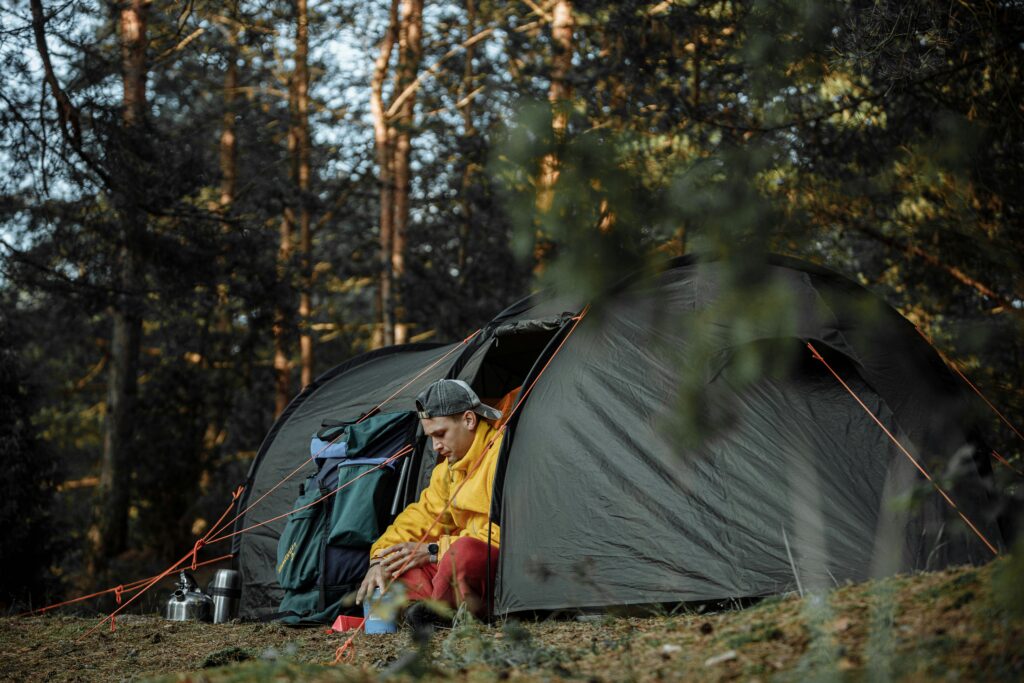
A tactical weather strategy is only as effective as your exit plan. During the intel phase of recon and route planning for weekend missions, you must identify “Bail-Out” points—mapped shortcuts, forest service roads, or secondary trail junctions that lead back to safety in the event of injury, gear failure, or a rapidly closing storm front.
- The “Point of No Return” (Pivot Point): Identify the specific coordinate where the distance to the extraction point via the remaining route is shorter than the distance back to the trailhead. Knowing this “Pivot Point” allows for decisive leadership; if a crisis occurs past this mark, you know instinctively that pushing forward is the fastest way to reach assistance.
- Emergency Egress Mapping: Mark these points clearly on your offline digital maps. In high-stress scenarios, cognitive load increases, making it difficult to find “unplanned” exits. Having pre-scouted escape routes ensures you aren’t searching for a path while the “Danger Clock” is ticking.
6. Scent and Wildlife Perimeter Planning
As part of your recon and route planning for weekend missions, you must research the local biological theater. Is the area currently experiencing high grizzly density, or are you crossing through a seasonal elk migration corridor? Identifying these high-traffic zones on your map allows you to avoid “Predatory Intersections.”
- “Triangle Outpost” Site Selection: Use the “Slope” and “Satellite” layers on your GPS app to identify flat benches or plateaus for camping before you arrive. Tactical SOP: Ensure these sites are at least 200 feet away from water sources and obvious “natural funnels” (like narrow passes). Water sources are often high-traffic wildlife corridors; by camping on a bench above the water, you maintain a tactical height advantage and keep your scent profile out of the animal’s primary path.
7. Communication Dead-Zones and Check-In SOPs
Modern scouts often rely too heavily on “Always-On” connectivity. During your recon and route planning for weekend missions, you must identify “Communication Gaps” where cell service is non-existent due to terrain shadowing or remote distance.
- The “Safety Contact” Protocol: Never depart without leaving a finalized “Mission Briefing” with a trusted home-base contact. This should include your specific trailhead coordinates, vehicle description, and a “Hard-Stop” time.
- The Hard-Stop Threshold: This is the absolute time at which your contact should initiate an emergency response. For example, if your ETA is 18:00, your Hard-Stop might be 22:00. This provides a buffer for minor delays while ensuring that if a true emergency occurs, SAR (Search and Rescue) is mobilized before the trail grows cold.
8. Calibrating for the “Human Factor”
The final stage of recon and route planning for weekend missions is the “Reality Check.” An elite plan on paper can become a disaster if it ignores the physical and psychological limits of the team.
- Squad Capabilities and the “30% Rule”: If you are scouting with beginners or an unproven team, automatically reduce your planned daily mileage and elevation gain by 30%. Fatigue is a primary cause of “Lapse in Judgment” and physical injury. A mission is only considered successful if the entire squad reaches the extraction point in good health and high morale.
- The “Slowest Link” Doctrine: Your pace is dictated by the slowest member of the team. Plan your “End of Daylight” targets based on their speed, not yours, to ensure the group stays tight and the perimeter remains secure.
Final Debrief: Knowledge is Safety
Recon and route planning for weekend missions is the mark of a professional. By analyzing topography, securing water intel, and leveraging 2026 satellite tech, you transform a risky outing into a controlled, elite operation.
Map the Grade. Verify the Water. Stay Ready.
FIELD BRIEFING: Creating a tactical packing checklist for beginners is the first step in moving from a disorganized “tourist” to a prepared “scout.” In the field, every ounce is a burden, and every forgotten item is a potential mission-stopper. You don’t just pack a bag; you build a Loadout—a series of modular, integrated systems designed to support your life and safety in the wild.
In 2026, the doctrine of “System-Based Planning” is the gold standard. By grouping gear into functional categories rather than a random pile of equipment, you ensure that even if you switch from a 3-day assault pack to a long-range rucksack, your essential capabilities remain intact.
1. The Survival Systems Hierarchy
When creating a tactical packing checklist for beginners, you must organize your gear by the “Rule of Priorities.” If space or weight becomes an issue during your pack-out, always prioritize the items that maintain your “Heat Core” and hydration over items that provide mere comfort.
- The First Aid System (Priority 0): This is your non-negotiable. As established in our Field First Aid Briefing, this includes your IFAK (Individual First Aid Kit) with a focus on massive hemorrhage control and environmental medicine.
- The Shelter System (Priority 1): Your “Hard-Point” in the wild. This includes your tent or hammock, your sleeping bag (rated for 10 degrees colder than the expected low), and an insulated sleeping pad.
- The Hydration System (Priority 2): Tactical water management involves three parts: Storage (bottles/bladders), Filtration (hollow-fiber filters), and Purification (chemical tablets or UV).
- The Sustainment System (Priority 3): This covers your “Fuel Logistics”—stoves, fuel canisters, and high-density caloric rations.
2. Redundancy and the “Rule of Two”
A professional approach to creating a tactical packing checklist for beginners requires eliminating “Single Points of Failure.” In the wilderness, “One is none, and two is one.” If your primary tool fails, your mission should not end.
- Fire Redundancy: If your primary butane lighter fails in high-altitude winds, do you have a ferrocerium rod and tinder?
- Navigation Redundancy: Never rely solely on a GPS or smartphone. Your checklist must include a physical Topographic Map of your AO and a baseplate compass.
- Illumination Redundancy: A primary high-lumen headlamp is essential, but you must carry a secondary “Angle-Light” or small tactical flashlight for backup and signaling.
3. The “Base Commander” Tool: Grid-It!® Organizer
To maintain modularity while creating a tactical packing checklist for beginners, you must prevent “Gear Migration”—the tendency for small, heavy items to sink to the bottom of your pack. We recommend the Cocoon Grid-It! Organizer for your “Tech and Tool” sub-loadout.
- Elastic Retention Technology: This system uses a weave of rubberized elastic straps to secure multi-tools, charging cables, spare batteries, and fire-starters in a flat, accessible configuration.
- Operational Efficiency: By using a Grid-It! insert, you can move your entire “Comms and Power” kit from one bag to another in seconds. It ensures that when you need a tool under stress, you aren’t digging through a “dark hole” at the bottom of your rucksack.
4. The Navigation and Comms System: The Information Edge
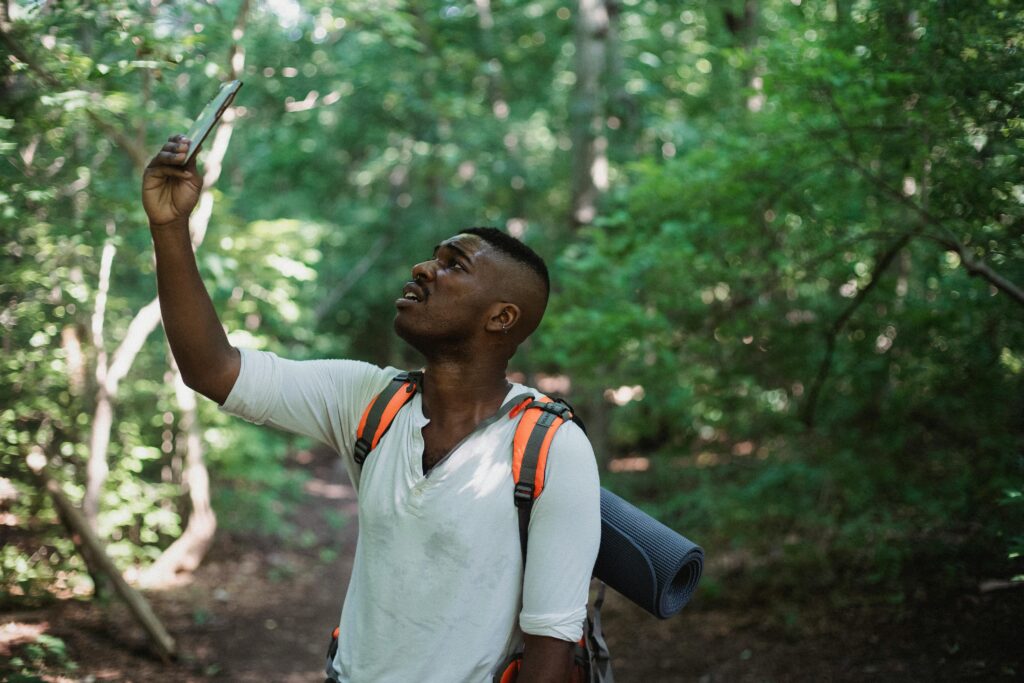
In 2026, your “Information Edge” is the primary factor that keeps you found, connected, and aware of shifting hazards. This system should be housed in a “Quick-Access” pocket—ideally on your chest rig or the lid of your pack—to ensure you can transmit an SOS or check your coordinates without de-shuldering your loadout.
- Active Satellite Tracking: When creating a tactical packing checklist for beginners, a dedicated satellite messenger (like the Garmin inReach or Zoleo) is a non-negotiable asset. Ensure the device is fully synced with your smartphone for offline topographic mapping. This “Dual-Layer” approach allows you to use the high-resolution screen of your phone for detailed scouting while the satellite device handles the heavy lifting of global positioning and emergency messaging.
- Power Reserve Logistics: Your Weather Strategy and navigation both rely on lithium-ion power. Include a minimum 10,000mAh Power Delivery (PD) bank and ruggedized, braided charging cables. Tactical SOP: In sub-freezing temperatures, keep your power bank and smartphone inside your inner jacket pocket. Cold temperatures cause “voltage sag,” which can drain a battery’s effective capacity by 30–50% in a matter of hours.
5. The Tool and Repair System (The “Pioneer” Kit)
In the wilderness, small mechanical failures often cascade into mission-ending problems. Your checklist requires a modular “Pioneer Kit” designed for rapid field maintenance of your apparel, shelter, and hardware.
- Multi-Role Hardware: Carry a high-quality multi-tool equipped with needle-nose pliers (for gear repairs), a wire cutter, and a serrated blade. This single tool replaces a dozen individual items, saving significant weight in your loadout.
- Structural Repair Logistics: When creating a tactical packing checklist for beginners, include a “Repair Suite” consisting of:
- 550 Paracord (25–50 ft): For replacing broken tent guy-lines or lashing gear to your pack.
- Gorilla Tape: Wrap 10 feet of tape around a lighter or a water bottle to save space; it is essential for patching holes in “Hard-Point” tents or sealing a leaking hydration bladder.
- The “Sailor’s Needle”: A heavy-duty needle and upholstery-grade thread allow you to perform “Field Surgery” on torn rucksack straps or boot gaiters, keeping your load-bearing equipment functional.
6. The Illumination and Signaling System
Operating in total darkness is a significant tactical disadvantage that increases the risk of injury and navigational errors. Your loadout must provide 360-degree light management and emergency signaling capabilities.
- Primary Headlamp Dynamics: Look for a unit with a minimum of 300 lumens and a dedicated Red Light Mode. Red light allows you to read maps and manage gear without “bleaching” your rhodopsin (the chemical in your eyes that allows for night vision) and reduces your visual signature to others in the AO.
- Emergency Extraction Signaling: If your electronics fail, you must have “Analog” signals ready. Include a high-decibel whistle (which carries much further than the human voice) and a glass signal mirror. In clear conditions, a signal mirror can be seen by search-and-rescue aircraft from up to 10 miles away, making it one of the most weight-efficient survival tools in your system.
7. The Apparel System (The “Layering” Doctrine)
The final rule for creating a tactical packing checklist for beginners is to abandon the concept of “outfits.” Instead, you must pack a “Thermodynamic System” of layers that can be modularly added or removed based on your metabolic output (the heat you generate while moving).
- The Wicking Base Layer: This is your “Skin-Level” moisture manager. Use thin merino wool or synthetic fibers to pull sweat away from the body before it can cool and trigger a “Cold-Soak” effect.
- The Active Mid-Layer: Use “Grid Fleece” or high-breathability synthetic hoodies. These trap pockets of warm air while allowing excess heat to escape during high-exertion climbs.
- The Protective Outer Shell: A waterproof and windproof hardshell (Gore-Tex or similar). This is your mechanical barrier against the convective cooling of the wind and the conductive cooling of the rain.
- The Static “Puffy” Layer: A high-loft down or synthetic jacket. Tactical SOP: This layer is for “Static” use only (when you are stopped or at camp). Keep it at the very top of your pack so you can throw it on the second you stop moving, trapping your “Movement Heat” before it dissipates into the environment.
Final Debrief
Creating a tactical packing checklist for beginners isn’t about buying the most expensive gear; it’s about the disciplined organization of your capabilities. By thinking in “Systems,” you ensure that your loadout is balanced, redundant, and mission-ready.
Audit Your Gear. Organize Your Systems. Stay Ready.
An army marches on its stomach, and your camping crew is no different. When you’ve been on a 10-mile recon hike or spent the afternoon establishing the perimeter, the last thing you want is a complex, 15-ingredient culinary operation. In the field, complexity is the enemy of efficiency.
True field-craft involves maximizing flavor and nutrition while minimizing cleanup and fuel consumption. This briefing covers high-morale “Sustainment Ops”—easy camping meals that are simple to deploy, require minimal gear, and are guaranteed to keep the team in peak fighting form. Whether you are operating from a base camp or moving light and fast, these rations ensure you never face a “starvation-induced” retreat.
1. Intelligence Gathering: Pre-Deployment Food Prep
The secret to easy camping meals isn’t what you do at the campsite—it’s what you do at Home Base before you deploy.
The “Chop & Drop” Strategy
Never bring a whole onion or a raw potato into the field if you can help it. Pre-cut all vegetables and store them in reusable, airtight bags. This reduces your “Trash Loadout” and saves critical time during low-light cooking operations.
Tactical Spice Kits
Don’t bring the whole spice rack. Use small, labeled containers or even repurposed film canisters to create “Mission Specific” spice blends. For example, a “Taco Blend” (Cumin, Chili Powder, Salt, Garlic) can transform basic ground protein into a high-morale feast in seconds.
2. Tactical Breakfast: The “Hobo-Burrito” Extraction

Morning operations require speed. You need a high-protein fuel source that gets the team moving toward the objective before the heat of the day sets in.
The Mission: One-Pan Breakfast Burritos
This is one of the most effective easy camping meals because it requires zero plates and offers massive caloric density.
- The Intel: Pre-crack your eggs into a Nalgene bottle or leak-proof container before leaving base. This prevents “structural failure” (broken shells) in your pack and makes pouring into the skillet a one-handed operation.
- Execution: Sauté pre-cooked sausage or bacon bits in a skillet to render the fat. Pour in the eggs. Once scrambled, throw in a handful of cheese. Roll the mixture into a heavy-duty flour tortilla.
- Tactical Advantage: Zero plates required. Wrap the burritos in foil for a hand-held meal on the move. The foil also keeps the food hot if a team member is delayed during gear breakdown.
3. Lunch Rations: The “No-Burn” Charcuterie Board
Mid-day stops should be “Cold-Start” operations. In a high-mobility scenario, you cannot afford to wait for a stove to prime or a fire to build.
The Mission: Elite Trail Grazing
- The Intel: Focus on high-density, shelf-stable items: Hard cheeses (Cheddar, Parmesan), cured meats (Salami, Pepperoni), and dried fruit or nuts.
- Execution: Lay out the supplies on a clean flat rock or a lightweight cutting board.
- Tactical Advantage: These ingredients don’t require refrigeration for short-duration missions. They provide immediate fat and sodium for electrolyte recovery, preventing the “mid-day crash” during heavy rucking.
4. The Main Event: “One-Pot” Tactical Chili

Dinner is about recovery and thermal regulation. You want a meal that warms the core and fills the tank after a long day in the theater of operations.
The Mission: Heavy-Duty, One-Pot Chili
Among all easy camping meals, the one-pot chili is the king of the campfire.
- The Intel: Use dehydrated beans and pre-cooked ground beef to save both weight and cooking time. If you’re at a vehicle-accessible base camp, canned ingredients are fine, but they increase your pack-out weight.
- Execution: Dump a can of crushed tomatoes, your protein, and your “Tactical Spice Mix” into your pot. Simmer for 15 minutes. For an extra morale boost, top with crushed corn chips.
- Tactical Advantage: Only one pot to clean. The high caloric density is essential for cold-weather operations where your body burns extra fuel just to maintain its internal temperature.
5. The “Field Commander’s” Recommendation: Backpacker’s Pantry Pad Thai
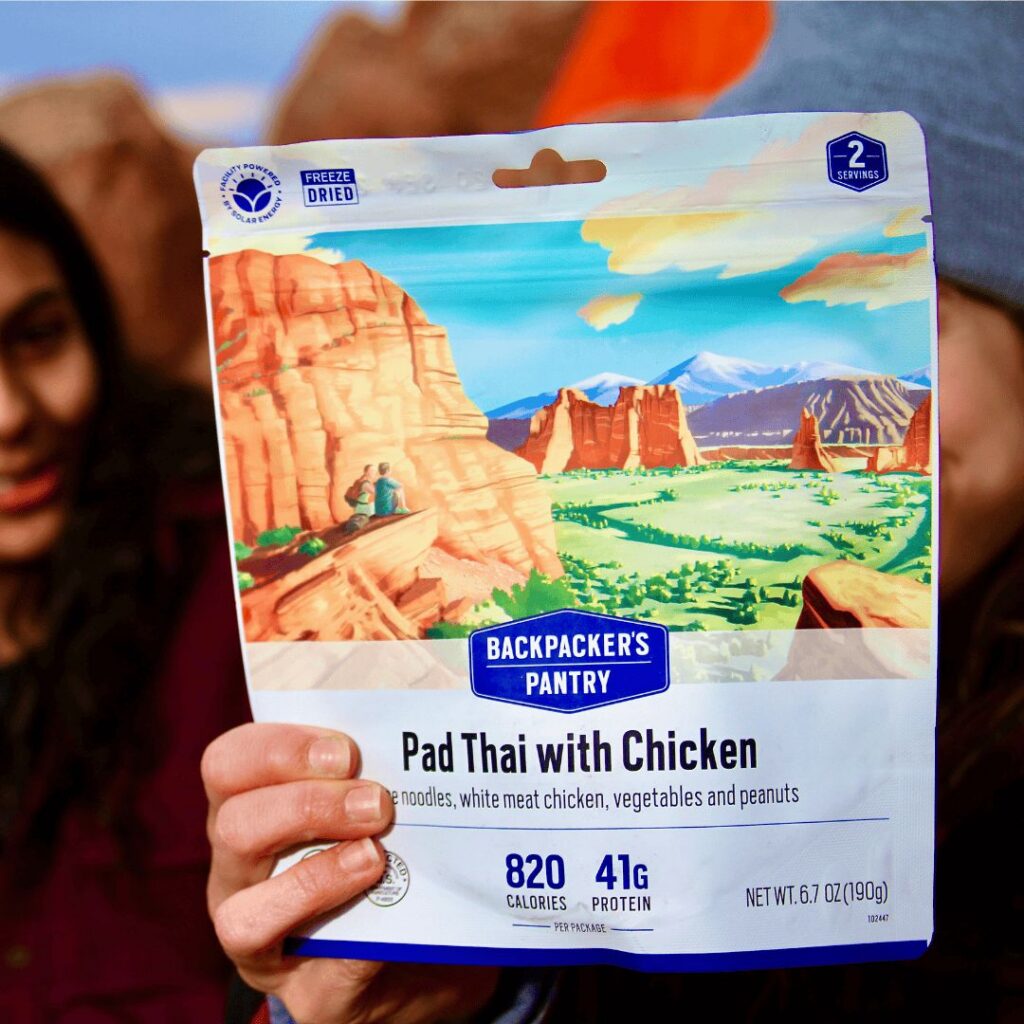
While “from-scratch” cooking is great for base camps, dehydrated meals are the primary choice for mobile units. For 2026, the Backpacker’s Pantry Pad Thai is our top high-efficiency recommendation.
- Field Briefing: It’s light in the pack, requires only boiling water, and the flavor profile—featuring lime, peanuts, and a kick of spice—is a massive morale boost compared to standard “brown” camp food.
- Nutrition Profile: It provides the perfect balance of carbs for glycogen recovery and protein for muscle repair.
6. The “Base Commander” Recommendation: Tactical Foodpack® (Six-Pack Expedition)
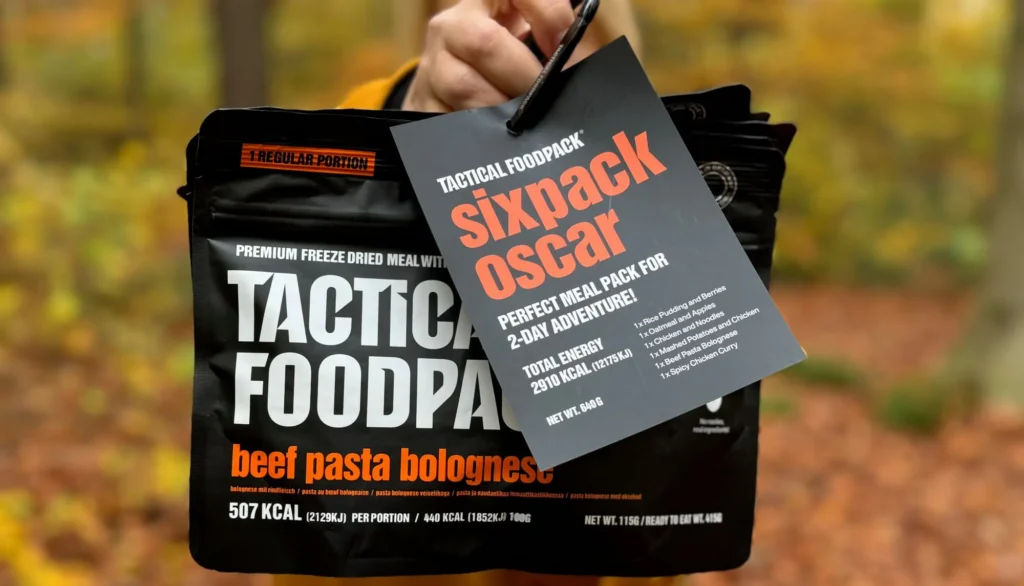
If you want the absolute best all-around meal system for 2026, we recommend the Tactical Foodpack® Six-Pack Expedition.
- Field Briefing: Forget the “mystery meat” of old-school MREs. Originally developed for Special Forces, these use 100% natural ingredients and a unique freeze-drying process that preserves the actual texture of the food.
- Why it’s a Top Pick: The packaging features a low profile that fits perfectly in a rucksack. More importantly, it features a “Flameless Heating” option. Add a little water to the heater bag, and you have a hot, chef-quality meal in 10 minutes without ever striking a match. This is the ultimate in stealth and efficiency.
7. Operational Hydration: Beyond Water
Water is life, but “enhanced hydration” is a tactical advantage.
- The Intel: Carry electrolyte tabs (like Nuun or Liquid I.V.) to replenish what you lose through sweat.
- Field Coffee: For many operators, caffeine is a mission-critical supply. Use high-quality instant coffee (like Mount Hagen) to save the weight of a French press or percolator.
8. Cleaning Protocol: Leaving No Trace
In the field, dirty dishes are a security risk. They attract unwanted wildlife (bears, raccoons) and can cause sanitation issues within your perimeter. Professional easy camping meals should always end with a professional cleanup.
- The Scrape: Use a rubber spatula to get every scrap of food out of the pot. If you cook it right, you should be able to eat 99% of what you make.
- The Boil: Add a small amount of water to the pot and bring it to a boil. This acts as a “thermal scrub,” loosening any stuck-on proteins.
- The Extraction: Strain the gray water at least 200 feet from any water source and pack out all food solids. Never dump food scraps in the woods; it habituates animals to human food, creating a “Problem Bear” for the next team.
Final Debrief
Good food is the difference between a successful mission and a miserable retreat. Plan your rations, prep your ingredients at home base, and keep your cooking systems simple. When the sun goes down and the fire starts, a hot meal is the best way to ensure your team is ready for tomorrow’s objective.
For more intel on the gear you’ll need to cook these meals, see our [Internal Guide to Tactical Camp Stoves] (Placeholder Link).
Stay Fed. Stay Sharp.