8 Strategies for Campsite Security: Protecting Your Gear and Rations
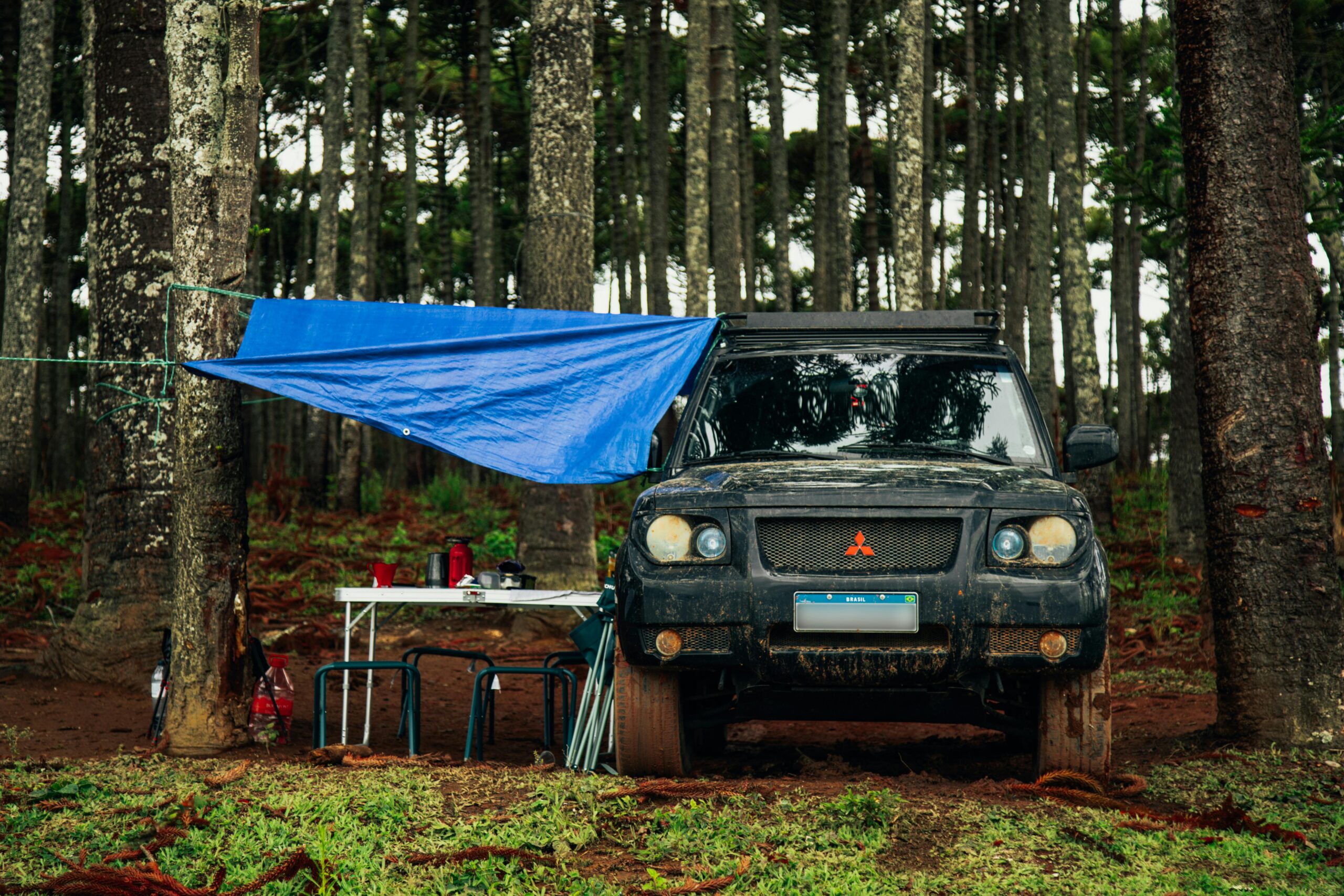
FIELD BRIEFING: FIELD BRIEFING: Campsite security: protecting your gear and rations is about establishing a “Hard Point” in the wilderness. When you are sleeping or away from your base on a patrol, your equipment and food are vulnerable to two distinct threats: opportunistic local wildlife and “civilian”…
FIELD BRIEFING: Campsite security: protecting your gear and rations is about establishing a “Hard Point” in the wilderness. When you are sleeping or away from your base on a patrol, your equipment and food are vulnerable to two distinct threats: opportunistic local wildlife and “civilian” theft.
A tactical scout knows that a compromised supply line or stolen hardware can end a mission instantly, leaving you stranded without the means to sustain yourself. In 2026, perimeter integrity is the difference between a successful deployment and an emergency extraction.
1. The Zero-Scent Perimeter: Neutralizing Bio-Signals
The most common breach of campsite security: protecting your gear and rations is rarely a direct confrontation; instead, it is a persistent probe from “micro-predators” (rodents) or apex predators (bears). These animals are not hunting you—they are tracking your “Smellable Signature,” which acts as a homing beacon for opportunistic scavengers.
- The 100-Yard Delta (The Bear Triangle): Always cook, eat, and store your rations at least 100 yards downwind from your sleeping area. This “Triangle Setup” creates a spatial buffer; if an animal investigates the aromatic lingering of your dinner, the wind carries that scent away from your bivvy, ensuring the predator is drawn to the kitchen zone rather than your tent.
- Hermetic Storage & Aromatic Cross-Contamination: Utilize Interagency Grizzly Bear Committee (IGBC) approved containers paired with odor-proof internal liners to lock in molecules. Tactical SOP: Never store “smellables”—including toothpaste, deodorant, snacks, or even empty wrappers—inside your shelter. Even a microscopic scent profile can trigger a “Perimeter Breach,” resulting in a shredded tent and a compromised mission before you ever wake up.
2. High-Value Asset Protection: Visual Signature Management
When leaving your camp for a day mission, a water resupply, or a reconnaissance patrol, you must manage your visual signature to avoid detection. “Out of sight, out of mind” is the primary rule for deterring human interference and opportunistic theft in the backcountry.
- Low-Profile Geometric Camouflage: Use drab-colored (OD Green, Coyote Brown, or Wolf Grey) tarps to cover your primary gear cache. By breaking up the sharp, geometric outlines of your rucksacks and technical equipment, you make them significantly less visible to “Casual Observers” or hikers on the main trail. A well-camouflaged cache blends into the shadows of the tree line, denying “Intel” to any unauthorized parties.
- The Cable-Lock Anchor System: Use lightweight, high-tensile strength cable locks to secure high-value assets—such as mountain bikes, portable power stations, or high-end coolers—to immovable objects like mature trees. While a determined thief with tools is hard to stop, this prevents “Grab-and-Go” thefts by opportunistic passersby, forcing any potential intruder to spend time and noise to breach your security.
3. The “Base Commander” Tool: YETI Tundra 45
For 2026, we recommend the YETI Tundra 45 (fitted with long-shank padlocks) as a foundational asset for campsite security: protecting your gear and rations.
- Certified Bear-Resistant: When locked with the appropriate padlocks, the Tundra series is virtually impenetrable to grizzly bears. This eliminates the need for complex “Bear Hangs” in areas with sparse tree cover.
- Hard-Point Storage: Beyond wildlife protection, the rotomolded construction serves as a heavy-duty lockbox for sensitive gear—like your Navigation and Comms backups—when you are operating away from the primary AO.
4. Acoustic Perimeter Alarms: Early Warning Systems
In high-risk environments, relying solely on your natural hearing while asleep is a tactical error. You need a mechanical “Active Alert” to notify you of a perimeter breach long before a predator or intruder reaches your tent door.
- The “Bear-Bell” Tripwire: Stretch a thin, low-visibility monofilament fishing line around your sleeping perimeter at a height of approximately 12 inches. Attach a small metal bell or a DIY “Rattle-Can” (an empty soda can containing a few small pebbles). This simple device creates a physical barrier that converts an intruder’s movement into an immediate audible signal.
- Tactical Response Window: This acoustic alert provides the vital seconds needed to fully wake up, orient yourself, and reach for your bear spray or air horn. By stripping away the “Element of Surprise” from a predator, you gain the psychological and tactical edge required to successfully defend your position.
5. Signature Sanitization: Managing “Micro-Trash”
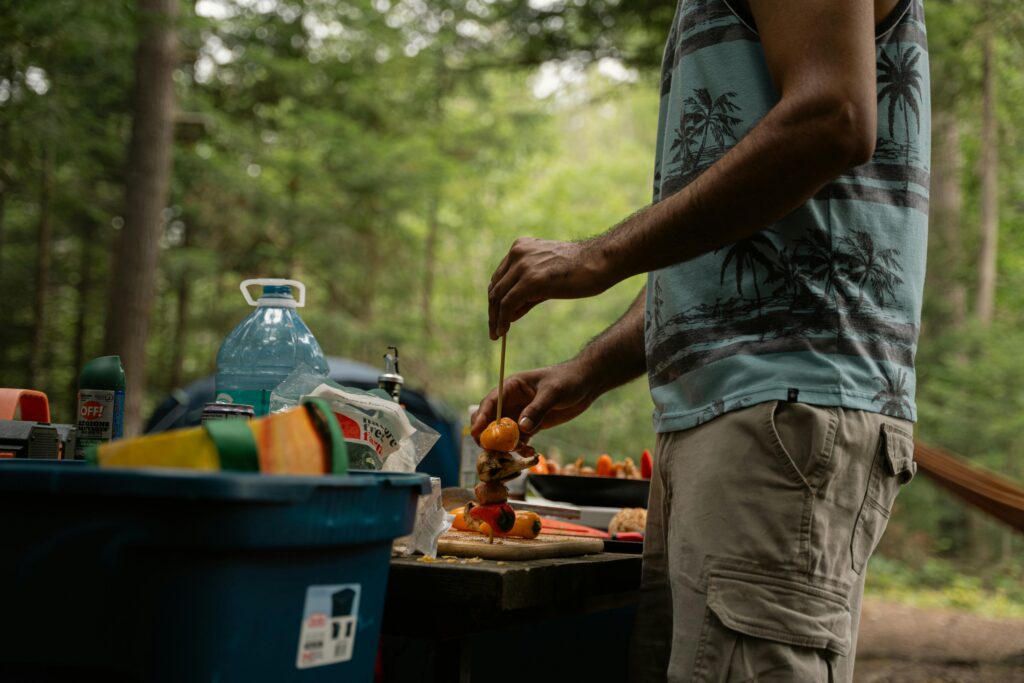
Campsite security: protecting your gear and rations is as much about what you leave behind as what you carry. Scraps of food act as “Ground Intelligence” for local wildlife, teaching them that your specific coordinates are a reliable source of calories for future visits.
- The 360-Degree “Crumb Sweep”: After every meal, perform a methodical sweep of the kitchen zone. Even microscopic items like spilled coffee grounds, rice grains, or fruit peels must be recovered and placed in your bear-resistant container.
- The “Grey Water” Protocol: Dispose of your strained dishwater at least 200 feet away from both your sleeping area and any water sources. This prevents the soil around your “Hard Point” from becoming a long-term scent magnet that could attract curious animals long after you’ve moved on to your next objective.
6. Night-Ops Lighting: Deterrence via Illumination
Wildlife and human intruders alike utilize the cover of darkness as a tactical advantage. By establishing a “Light Perimeter,” you create a psychological barrier that most animals are hesitant to cross.
- Motion-Activated Perimeter Defense: Utilize small, solar-powered LED motion lights clipped to trees facing high-traffic areas like the main trail or your kitchen zone. A sudden burst of 100 lumens or more is often enough to spook a curious coyote or alert a human trespasser that they have triggered a security sensor.
- The Active Red-Light Scan: Use the red-light mode on your Black Diamond Headlamp to conduct periodic perimeter sweeps throughout the night. This allows you to spot “Eyeshine” (the reflective tapetum lucidum of an animal) at a distance without “bleaching” your natural night vision or projecting a massive white-light signature.
7. The “Bear Bag” High-Angle Logic
In theaters where bear canisters are not legally mandated but wildlife is highly active, a masterfully executed “Bear Hang” serves as your secondary line of defense for ration security.
- The 12-4-10 Physics Rule: To be effective against a climbing bear, the bag must be suspended at least 12 feet off the ground, 4 feet away from the trunk of the tree, and 10 feet down from the supporting branch. This “Safety Box” is the only area a bear cannot physically reach from the ground or the tree structure.
- The “PCT Hang” Technical Rigging: Use a 550 Paracord rigged with the “PCT” (Pacific Crest Trail) method. This uses a toggle and a locking hitch to ensure the bag is securely anchored to the line itself. This prevents a bear from simply slashing the cord at the trunk to drop your supplies, keeping your rations out of reach regardless of the animal’s persistence.
8. Defensive Placement: Tactical Site Selection
Elite security begins the moment you choose your ground. Your campsite should be naturally defensible and offer high “Situational Awareness” in all directions.
- Avoiding “Natural Funnels” and Highways: Never pitch your tent in narrow passes, valley bottlenecks, or directly on game trails. Animals use these as “High-Speed Corridors,” and by camping there, you are essentially setting up a roadblock in the middle of a high-traffic highway.
- The High-Ground Advantage: Whenever the terrain allows, pitch your camp on a slight elevation or a “Bench.” This provides superior drainage during storms and gives you a commanding visual advantage over the surrounding AO. Being slightly elevated makes it significantly harder for anything to approach your perimeter undetected, allowing you to monitor the approach from a position of strength.
Final Debrief: Lock Down the AO
Campsite security: protecting your gear and rations is a full-time responsibility. By establishing a zero-scent perimeter, using hardened storage like the YETI Tundra, and managing your visual signature, you ensure that your supplies stay where they belong: under your control.
Harden the Site. Secure the Rations. Stay Ready.
"Observe, orient, decide, and act."