5 Dangerous Mistakes to Avoid When Building a Safe Campfire in the Field
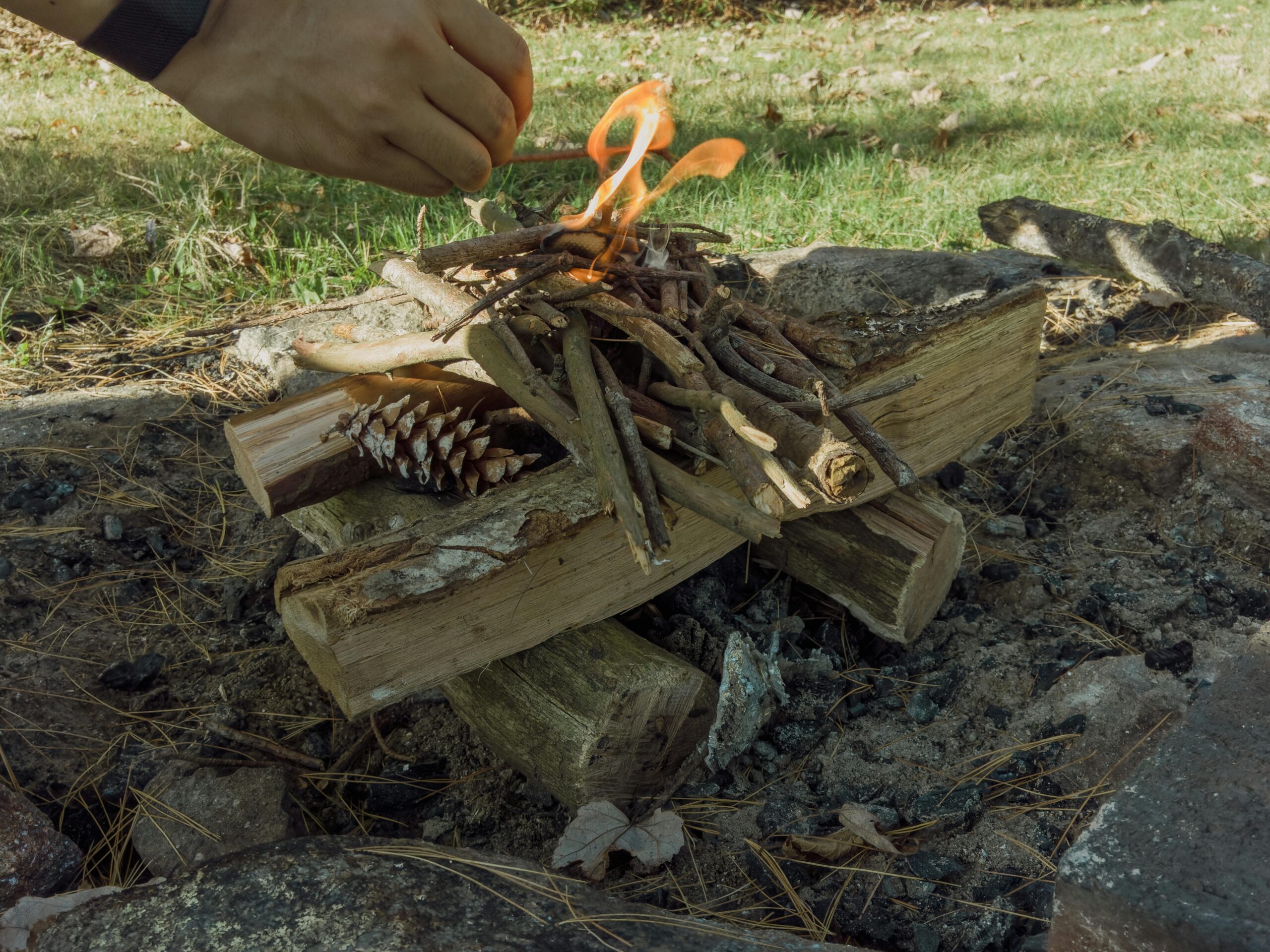
FIELD BRIEFING: Building a safe campfire in the field is a primary survival skill, providing heat, light, and the ability to cook rations. However, fire is a volatile asset. If not managed with military-grade discipline, it can compromise the Area of Operations (AO), destroy your gear, and…
Building a safe campfire in the field is a primary survival skill, providing heat, light, and the ability to cook rations. However, fire is a volatile asset. If not managed with military-grade discipline, it can compromise the Area of Operations (AO), destroy your gear, and threaten the local ecosystem.
A tactical scout views fire as a tool that must be contained within a “Hard Perimeter.” This briefing breaks down the tiered fuel system and the safety protocols required to maintain a secure thermal source without leaving a trace.
1. The Three-Tier Fuel System: Logistics of Combustion
To succeed in building a safe campfire in the field, you must categorize your fuel by its density and ignition point long before you strike your first spark. Attempting to ignite a large log with a match or a single spark is a tactical failure that wastes time and resources. A disciplined scout gathers enough fuel for the entire night before the “First Strike.”
- Tinder (The Ignition Layer): These are materials with an extremely high surface-area-to-mass ratio, designed to catch a low-temperature spark and transform it into a high-intensity flame. Tactical Examples: Dry grasses, shredded cedar bark, cattail fluff, or “Fatwood” (highly flammable resin-soaked pine). Tinder is your “primary igniter”—it burns hot and fast, providing the initial thermal energy required to overcome the moisture barrier of your next fuel tier.
- Kindling (The Bridge): Once your tinder is active, you must quickly introduce kindling. These are small twigs ranging from toothpick-size to pencil-thick. Kindling acts as the strategic bridge; it has enough mass to sustain a flame but is thin enough to catch fire from the fleeting heat of the tinder. SOP: Arrange your kindling in a “teepee” or “log cabin” structure to allow for maximum oxygen flow, which is the chemical catalyst for combustion.
- Fuel Wood (The Sustainment): These are the high-density logs ranging from “wrist-sized” to full-diameter timber. This is the heavy lifting of building a safe campfire in the field, providing the sustained thermal output (BTUs) required for the night. Critical Failure Warning: Never add fuel wood until your kindling base has collapsed into a robust, glowing bed of coals. Prematurely adding heavy logs will “choke” the fire, cutting off oxygen and extinguishing your progress.
2. Perimeter Establishment: The 10-Foot Rule
When building a safe campfire in the field, ground preparation is the most critical safety factor. An undisciplined fire can travel through invisible channels, compromising your safety and the surrounding environment.
- Mineral Soil Access (The Excavation): You must clear a minimum 10-foot diameter safety buffer of all flammable debris—dry leaves, pine needles, and “duff” (the spongy layer of decomposing organic matter). You are not finished until you reach “Mineral Soil”—the raw dirt or sand beneath the organic layer. Tactical Rationale: Fires can “creep” underground through dry root systems and organic duff, resurfacing dozens of feet away hours after you’ve left. Reaching mineral soil creates an indestructible thermal break that contains the fire to your intended zone.
- The Rock Ring and Thermal Expansion: If an established fire ring is not available in your AO (Area of Operations), you must construct one. Select dry, inland rocks to create a circular barrier. Tactical Warning: Never use rocks from riverbeds or standing water. These rocks are often porous and contain trapped moisture. When subjected to the high heat of a campfire, the water turns to steam, creating internal pressure that can cause the rock to explode into high-velocity shrapnel.
- Overhead Clearance: Just as you sweep the ground, you must sweep the sky. Ensure there are no low-hanging branches within 15 feet of your fire pit. Rising heat and stray embers can ignite dry leaves above, leading to a crown fire that is impossible to contain with standard field tools.
3. The “Base Commander” Tool: Ferrocerium Rod
Lighters fail in extreme cold when butane won’t vaporize, and matches are rendered useless by humidity. For building a safe campfire in the field, the Ferrocerium (Ferro) Rod is the ultimate tactical fire-starter.
Field Briefing: * Why it’s Tactical: A Ferro rod produces sparks at roughly 3,000°F (1,650°C). These sparks are hot enough to ignite tinder even in rain or high-wind conditions.
- Operational Longevity: A single rod can provide between 5,000 and 12,000 strikes, making it a “Force Multiplier” for your survival kit. It is indestructible, waterproof, and mission-ready at all times.
4. The “Cold-Out” Standard: Extraction Protocol
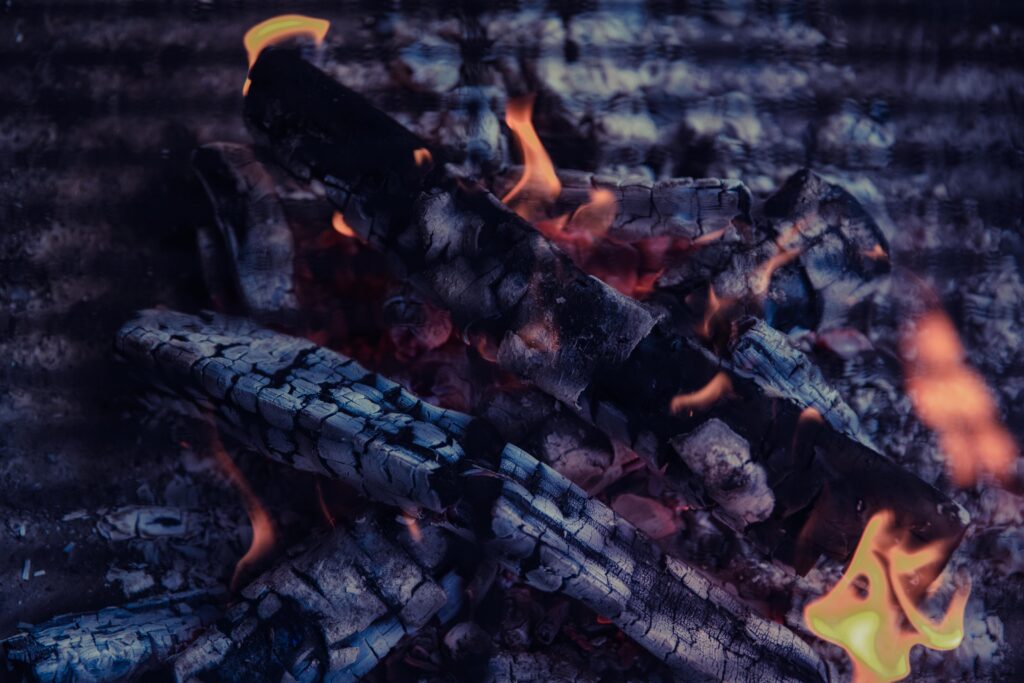
In the tactical community, a fire is considered a “Target” for total neutralization. A professional scout never leaves a “Hot Trace” that could ignite hours after extraction. Building a safe campfire in the field is a mission-critical responsibility that only ends when the thermal signature of your site is indistinguishable from the surrounding environment.
- The Drown, Stir, and Saturate Method: A common amateur error is pouring a single liter of water over the flames and assuming the job is finished. This creates a “steam cap” that traps high-intensity heat in the coals below. You must pour water until the audible “hissing” stops completely. Once the steam clears, use a sturdy shovel or stick to stir the slurry of ash and water. This mechanical agitation exposes hidden hot spots and embers buried deep in the mineral soil. Saturate the area again until the entire pit resembles a cold, wet soup.
- The “Back of the Hand” Touch Test: This is the non-negotiable final verification step of the Cold-Out Standard. After stirring and saturating, wait five minutes for the heat to stabilize. Then, place the back of your hand directly onto the wet coals and the surrounding rocks. If you detect any warmth whatsoever, you have failed the protocol. Your fire is not “done” until the ground is cold to the touch. Failing to execute this “Touch Test” is an irresponsible mistake that leads to catastrophic wildfires and potential legal liability.
5. Meteorological Awareness: Wind and Fire Dynamics
Before building a safe campfire in the field, you must conduct an atmospheric survey of your Area of Operations (AO). Fire and wind are a volatile combination that can turn a controlled sustainment tool into a localized disaster in seconds.
- The High-Wind Abort Protocol: Consult your digital anemometer before striking a spark. If sustained winds exceed 15 mph (24 kph), or if gusts are unpredictable, you must abort the campfire mission. High winds increase the oxygen delivery to the fire, causing it to burn with uncontrolled intensity. More importantly, wind can carry “lofting embers” hundreds of yards into dry brush, igniting secondary fires outside your perimeter that you cannot contain. In these conditions, rely on your portable stove for rations and your layering system for warmth.
- Strategic Windward Positioning: Always establish your seating and gear on the windward side (the side the wind is coming from) of the fire. This is a matter of situational awareness. By keeping the wind at your back, you ensure that smoke and particulate matter are carried away from your face. This prevents “Smoke Blindness” and respiratory irritation, which can compromise your vision and decision-making during night-ops.
- The Ember-Watch Duty: In a squad-based operation, one individual should always be designated as the “Fire Watch.” Their sole responsibility is to monitor the perimeter for stray embers and ensure the flame height does not exceed a manageable level (typically no higher than the knee).
Final Debrief
Building a safe campfire in the field is about discipline over aesthetics. By following the three-tier fuel system, adhering to the 10-foot mineral soil rule, and enforcing the “Cold-Out” standard, you ensure your outpost remains a place of sustainment rather than a point of origin for a disaster.
Control the Flame. Leave No Trace. Stay Ready.
"Observe, orient, decide, and act."