10 Field Procedures for a Successful First Tactical Deployment
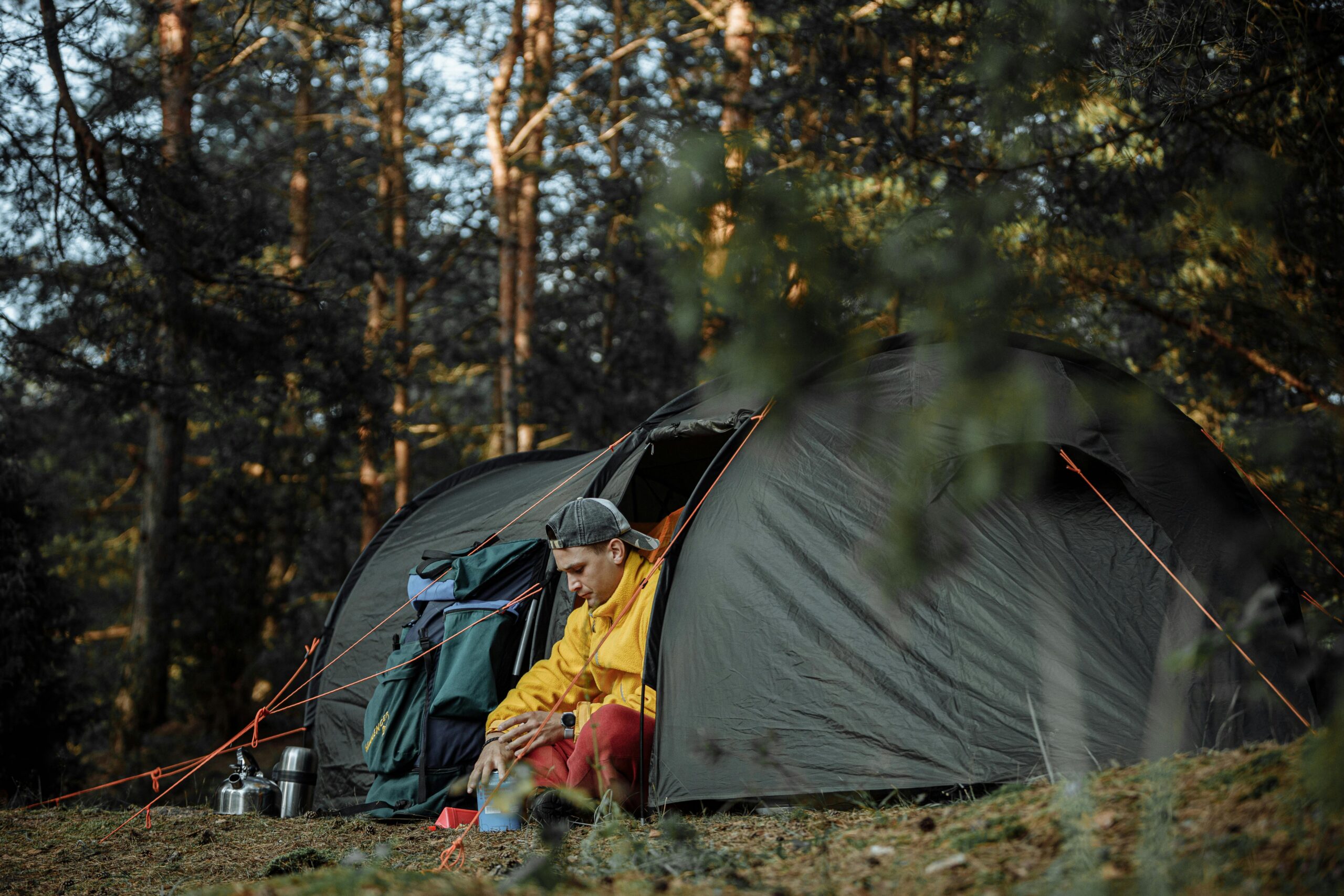
FIELD BRIEFING: To establish a successful base of operations in the wild, a rookie operative needs more than just a tent and a positive attitude. You need a Standard Operating Procedure (SOP). In the military, procedures are designed to ensure mission success under extreme duress. In the…
To establish a successful base of operations in the wild, a rookie operative needs more than just a tent and a positive attitude. You need a Standard Operating Procedure (SOP). In the military, procedures are designed to ensure mission success under extreme duress. In the camping world, these same field procedures are what separate a refreshing weekend from a cold, disorganized disaster.
The wilderness is a neutral environment, but it is also an unforgiving one. When you step off the pavement and into the brush, you are entering an uncontrolled theater of operations. Your survival, comfort, and morale depend entirely on your ability to execute basic field procedures with ironclad discipline. This comprehensive manual covers the full lifecycle of a mission, from initial reconnaissance to final extraction.
I. Intelligence Gathering: The Reconnaissance Phase
Every successful mission begins at home base with a thorough “Intel Dump.” Beginners often fail because they treat camping as a spontaneous act. In reality, it is a logistical operation where information is your most valuable asset.
1. Sector Selection
Not all campsites are created equal. For your first mission, you are looking for a “Level 1” Outpost—typically a state or national park with established infrastructure.
- Proximity to Extraction: Stay within a 2–3 hour drive of your home station. If a gear failure or medical emergency occurs, you need a viable line of retreat.
- Amenity Audit: Does the sector provide potable water? Are there designated fire rings? Is there a ranger station nearby? For a first-timer, these aren’t “cheating”—they are safety nets.
2. Meteorological Intelligence
Weather in the wild is not a suggestion; it is a command.
- The 48-Hour Window: Monitor local forecasts specifically for the elevation of your site. Temperatures at a trailhead can be 10°F–15°F different than at the summit.
- Contingency Planning: If the forecast calls for sustained heavy rain or high winds during your first run, consider a “Tactical Reset” (rescheduling). Learning the ropes is hard enough without fighting a gale.
II. Logistics: Building Your Loadout
In the field, your gear is your life support. Every item in your rucksack must have a purpose. Professional field procedures dictate a “ounces equal pounds” mindset.
1. The Sleep System (Thermal Management)
The ground is a heat sink. It will steal your body heat through conduction.
- The R-Value Doctrine
- The ground is your primary thermal threat. When selecting a sleeping pad, you must verify the R-value, which measures the material’s thermal resistance.
- Spring/Summer Missions: An R-value of 2 to 3 is sufficient for standard temperate climates.
- Winter/Alpine Operations: To prevent the earth from siphoning your core heat, you need an R-value of 5.0 or higher.
- The Bag: Use a sleeping bag rated for at least 10°F colder than the lowest predicted temperature to maintain a “buffer zone” of warmth.
2. The Sustenance Kit
A hungry operator is an ineffective operator.
- Caloric Density: Focus on high-protein, high-fat meals that require minimal water to prepare.
- The Clean Water Protocol: Even in established parks, carry a secondary filtration method (like a LifeStraw or purification tablets) in case the primary pump fails.
III. Field Deployment: Establishing the Perimeter
Once you arrive at your designated sector, the clock is ticking. You must establish your base before “End of Daylight” (EOD). Setting up a tent in the dark is an unnecessary stressor that leads to gear damage.
1. Site Recon (The 5-Minute Survey)
Before you unpack a single stake, walk the site. Look for:
- Widowmakers: Dead branches hanging overhead. One gust of wind can turn a branch into a lethal projectile.
- Low-Ground Hazards: Avoid depressions where water will pool if it rains. Seek slightly elevated, flat ground.
- Wind Orientation: Position your tent so the smallest profile faces the wind.
2. Shelter Deployment
Your tent is your “Hard Point.”
- The Footprint: Lay down a groundsheet first. It should be slightly smaller than the tent floor to prevent rain from pooling underneath.
- Stake Discipline: Drive stakes at a 45-degree angle away from the tent. This provides the maximum mechanical advantage against wind.
- The Rainfly: Even if the sky is clear, deploy the rainfly. It provides thermal insulation and protects against morning dew.
IV. Firecraft and Energy Management
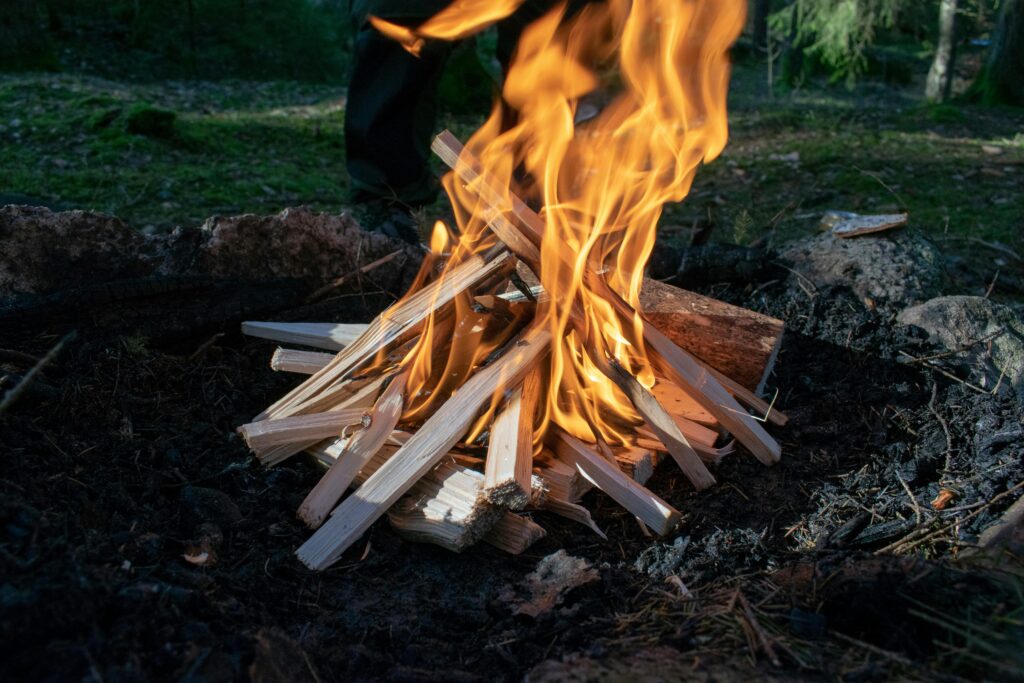
Fire is a double-edged sword. It provides heat and morale, but it requires constant vigilance and specific field procedures to remain safe.
- The Safe Zone: Maintain a 10-foot “Clear Zone” around your fire ring. Remove all dry leaves, grass, and flammable debris.
- Fuel Grades: Collect “Tinder” (dry grass/shavings), “Kindling” (small twigs), and “Fuel Wood” (large logs) before you strike your first match.
- The “Cold-Out” Protocol: Never leave a fire unattended. Before sleeping, execute a full “Drown and Stir” procedure. Pour water, stir the ashes, and repeat until the ground is cool to the touch.
V. Wildlife OPSEC (Operational Security)
The animals in your Area of Operations (AO) are interested in one thing: your rations.
1. The “Bear Triangle”
For maximum safety, organize your camp in a triangle:
- Sleeping Area: Upwind.
- Cooking/Eating Area: 100 feet away.
- Food Storage: 100 feet from both, preferably in a bear-proof canister.
2. Zero-Scent Discipline
Never bring food, toothpaste, or flavored drinks into your tent. Mice and squirrels can chew through a tent wall faster than a bear, and they are far more common “enemy combatants.”
VI. Tactical Item Recommendation: The Individual First Aid Kit (IFAK)
If you are only going to carry one high-value, mission-critical asset in your kit for 2026, it must be a dedicated Individual First Aid Kit (IFAK). While a multi-tool fixes your gear, the IFAK fixes the operator.
Field Report: Why the IFAK? Standard “civilian” first aid kits are often filled with adhesive bandages and ointments that are useless in a high-consequence environment. A true tactical IFAK is designed for Trauma Management—addressing severe injuries that can occur during heavy field deployment.
- Hemorrhage Control: A professional IFAK includes a CoTCCC-recommended tourniquet (like the CAT Gen 7) and hemostatic gauze. In the wilderness, stopping a major bleed is the difference between an extraction and a casualty.
- Airway and Respiratory Support: It features vented chest seals and potentially a nasopharyngeal airway (NPA) to maintain respiratory function if a “widowmaker” branch causes thoracic trauma.
- Wound Management: Beyond simple cuts, it provides pressure bandages and “Israeli” style dressings that allow for self-application under duress.
- Tactical Mobility: Unlike bulky medical bags, an IFAK is designed to be worn on a belt or plate carrier, ensuring life-saving tools are within the “immediate reach” zone at all times.
VII. Navigation and Communications
Technology is a tool, but it is not a fail-safe.
- The “Analog Backup”: Always carry a physical topographic map and a compass. In deep canyons, GPS signals can drop and batteries can fail.
- The “Float Plan”: Before deployment, leave a written plan with someone at “Home Base.” Include your exact coordinates and your “Hard Exit” time—the time they should call authorities if they haven’t heard from you.
VIII. Tactical Medicine: First Aid
Minor injuries in the city are inconveniences; in the wild, they are mission-stoppers.
IX. Extraction: Leave No Trace (LNT)
A professional operator leaves the AO cleaner than they found it. This is the final and most important of all field procedures.
- Micro-Trash Sweep: Before leaving, do a “grid search” of your site. Pick up even the smallest bits of trash—including fruit peels and eggshells.
- Naturalization: Scatter any unused firewood and smooth over the ground where your tent stood. The goal: The next team to arrive should have no idea you were ever there.
Final Debrief
Camping is a skill set that rewards the disciplined and punishes the lazy. By treating your first trip as a series of field procedures, you minimize risk and maximize the experience. You are no longer just “sleeping outside”—you are an operator managing a mobile outpost.
Prepare your gear, brief your team, and execute with precision.
Mission Status: Ready for Deployment.
"Observe, orient, decide, and act."