5 Disastrous Mistakes When Choosing the Right Sleeping Bag for Every Terrain
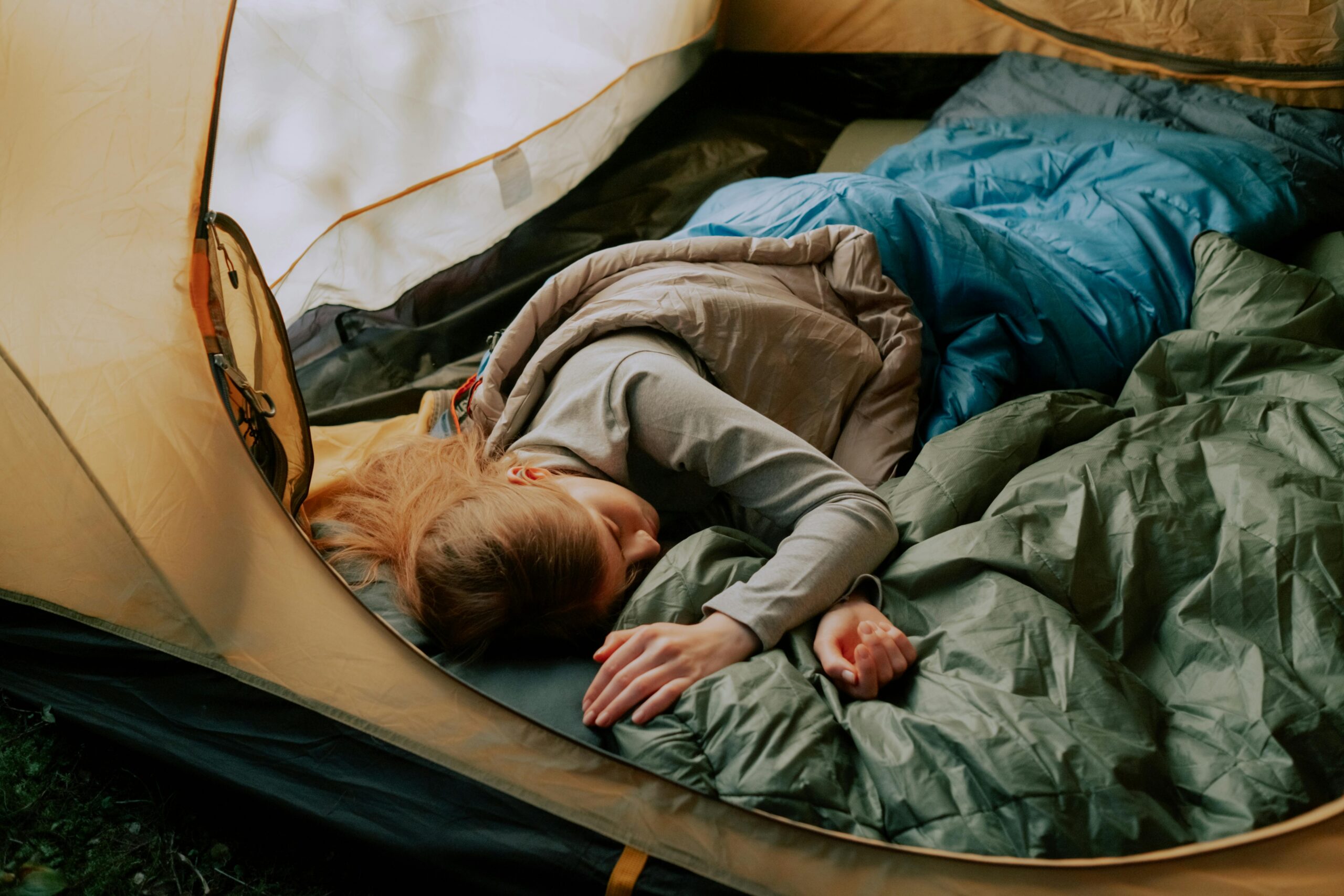
FIELD BRIEFING: Choosing the right sleeping bag for every terrain is the most important decision you will make for your thermal recovery. In the field, sleep is not a luxury—it is a physiological necessity for maintaining cognitive function and physical readiness. If you choose the wrong equipment,…
Choosing the right sleeping bag for every terrain is the most important decision you will make for your thermal recovery. In the field, sleep is not a luxury—it is a physiological necessity for maintaining cognitive function and physical readiness.
If you choose the wrong equipment, a sudden drop in ambient temperature can turn a standard mission into a dangerous survival situation. This briefing breaks down the metallurgy of heat retention, insulation logistics, and the hardware required to ensure your “Heat Core” remains protected in any theater of operations.1. Decoding the Temperature Rating: The Survival Gap
When choosing the right sleeping bag for every terrain, you must distinguish between “marketing numbers” and “survival reality.” In 2026, most reputable manufacturers use the ISO 23537 or EN 13537 standardized testing. These tests use a copper manikin equipped with thermal sensors to simulate heat loss, but they do not account for real-world variables like wind chill, humidity, or operational fatigue.
- Comfort Rating: This is the baseline for a standard female sleeper or a “cold sleeper.” It represents the temperature at which the operative can sleep soundly in a relaxed, flat position without feeling the chill. If you value sustained cognitive performance, this is the only number you should trust.
- Lower Limit: Often marketed as the primary “rating” of the bag, this indicates the temperature at which a standard male sleeper (typically a “warm sleeper”) can survive in a curled “fetal” position for eight hours. While you won’t freeze, you will likely experience “Micro-Wakes” throughout the night, leading to mental fog the next morning.
- Extreme/Survival Rating: This is a “Danger Zone” metric. It represents the absolute limit where a human can survive for six hours without succumbing to hypothermia. At this temperature, however, frostbite is a distinct possibility, and sleep is impossible. Never plan a mission based on this number.
Tactical SOP: The 15-Degree Buffer
Always choose a bag with a Comfort Rating that is 15°F colder than the lowest temperature you expect. For example, if the forecast predicts a low of 30°F, deploy a 15°F rated bag to ensure your body can actually recover and stay warm.
2. Insulation Logistics: Down vs. Synthetic
The core of choosing the right sleeping bag for every terrain lies in the “fill.” Your choice depends entirely on the meteorological intelligence and humidity levels of your sector. Insulation works by trapping “dead air” in small pockets; the thicker the layer of trapped air (the loft), the warmer the bag.
Down (The High-Speed, Low-Drag Choice)
Down consists of the light, fluffy plumage found underneath the exterior feathers of ducks or geese. In the world of choosing the right sleeping bag for every terrain, down is the gold standard for weight efficiency.
- Tactical Rationale: Down has an incredible “Fill Power” (the volume one ounce of down occupies). High-tier 800+ fill power bags offer unparalleled warmth while packing down to the size of a 1-liter canteen. If maintained at home base—stored uncompressed—a down bag can maintain its thermal integrity for 20+ years.
- Critical Failure Point: Down’s greatest weakness is moisture. If the plumage becomes saturated, the clusters collapse and turn into a sodden clump, losing $90\%$ of their insulating properties. In high-humidity maritime sectors or temperate rainforests, a down bag is a tactical liability unless paired with a high-performance waterproof bivvy.
Synthetic (The All-Weather Workhorse)
Synthetic insulation utilizes long-staple polyester fibers or “short-staple” clusters to mimic the structure of down.
- Tactical Advantage: Unlike down, synthetic fibers are non-absorbent. If your tent leaks or you experience a “Wet-Gap” crossing, the synthetic bag will continue to trap air and provide warmth even when damp. It also dries significantly faster in the field. This makes it the “Durable Choice” for rookies or for missions in swampy, high-precipitation environments.
- Operational Trade-offs: Synthetic bags are $30\text{–}50\%$ heavier and significantly bulkier than down equivalents. Over several years of being stuffed into a rucksack, the fibers will eventually break down and lose their “spring,” resulting in a permanent loss of warmth.
3. Shape and Volume: Maximizing Thermal Efficiency
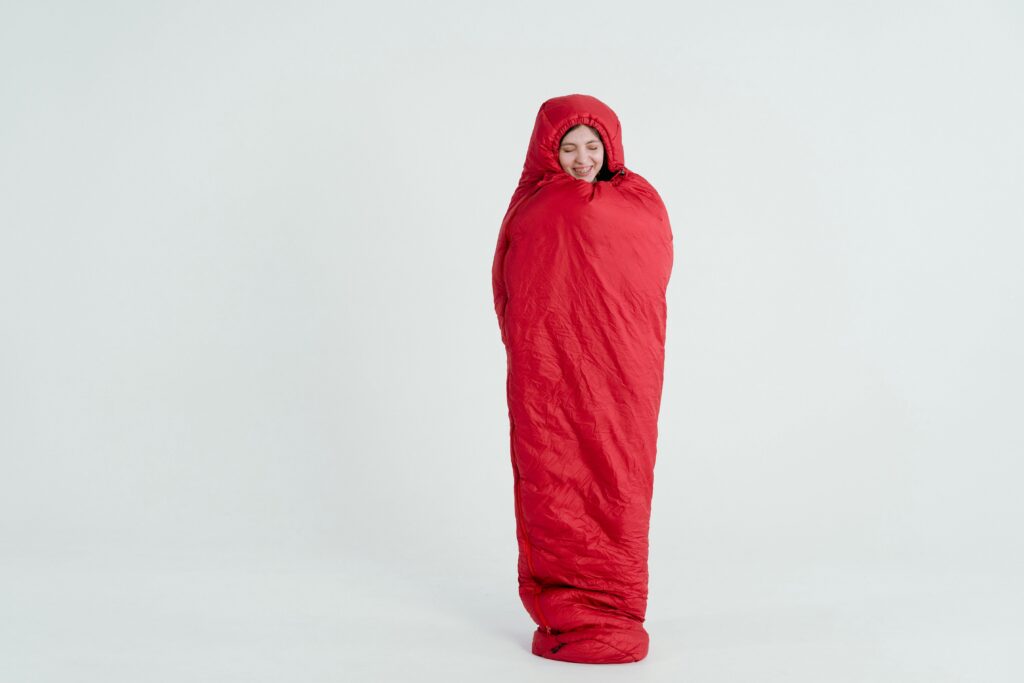
The “Cut” of your bag determines how much air your body is required to heat. In the field, excess space is not a luxury—it is a thermal drain on your metabolic resources.
Draft Collars and Zippers: When evaluating a bag, inspect the “Draft Tube”—an insulated flap that runs the length of the zipper. Without a high-quality draft tube, heat will bleed out of the zipper line, creating a localized cold spot that can disrupt your sleep cycle.
Mummy Bags (Standard Issue): These bags are anatomically tapered to follow the contours of the human body, narrowing at the feet and including a fitted, cinched hood. They are the primary choice for choosing the right sleeping bag for every terrain because they eliminate “Dead Air Space.” By keeping the volume of air around your body to a minimum, your “Heat Core” can maintain the internal temperature of the bag with significantly less caloric expenditure.
Rectangular Bags (Base Camp Only): These offer a “Civilian Comfort” feel by allowing for leg movement, but they are a thermal disaster in cold weather. Every time you shift, the large volume of air inside moves, creating a “bellows effect” that pumps warm air out and sucks cold air in. Only deploy rectangular bags for summer missions where heat dissipation is more important than heat retention.4. The “Base Commander” Tool: M-CAS Compression Sack
Field Briefing: * Why it’s Tactical: Unlike standard “ballooning” dry bags, the M-CAS uses a specialized manual air-release valve or permeable membrane designed for high-pressure compression. This allows you to purge every cubic inch of dead air, shrinking your sleeping bag into a dense, rock-hard cylinder that maximizes rucksack space.
Waterproof Integrity: Constructed from heavy-duty, TPU-laminated nylon, the M-CAS ensures your bag remains 100% dry during amphibious extractions or heavy rain. In the field, a wet sleeping bag is a thermal failure; the M-CAS provides the fail-safe security required for elite operations.
4. The “Base Commander” Tool: M-Tac Compression Stuff Sack
Field Briefing: * Why it’s Tactical: The M-Tac system is engineered for high-mobility units. Unlike civilian bags that use flimsy nylon, M-Tac utilizes heavy-duty, abrasion-resistant 100% Nylon. This ensures that even when compressed to the absolute limit under high tension, the seams won’t blow out—a common “Soft Target” failure in cheaper gear.
- Volume Reduction: It features four heavy-duty lateral compression straps with reinforced stitching. This allows you to crush your sleeping bag into a compact, manageable cylinder, freeing up critical real estate in your rucksack for rations and mission-essential hardware.
- Moisture Protection: While primarily a compression tool, the specialized coating provides a rugged barrier against dampness and dirt. It ensures your sleeping bag doesn’t become a sponge for condensation or ground moisture during transport.
Tactical Pro-Tip: When using the M-Tac, pull the straps in a “criss-cross” pattern rather than one by one. This applies even pressure to the sleeping bag, preventing it from “lumping” and ensuring a more balanced load in your pack.
5. Field Maintenance and Loft Management
Once you’ve succeeded in choosing the right sleeping bag for every terrain, you must maintain its “Loft” (the thickness of the insulation).
- Uncompressed Storage: Never store your bag in its tiny compression sack at home base. This “crushes” the fibers or down clusters, permanently reducing their ability to trap heat. Store it in a large, breathable mesh laundry bag.
- The “Shake-Out” SOP: Upon reaching your outpost, deploy your bag immediately. Give it 20–30 minutes to “loft up” and regain its full thermal potential before you climb in for the night.
Final Debrief
Choosing the right sleeping bag for every terrain is an exercise in resource management. By matching your insulation to your environment and respecting the “Comfort Rating” gap, you ensure that your body can recover from the day’s march.
Secure Your Heat. Recover Your Strength. Stay Ready.
SEO Checklist & Optimization Summary:
- Focus Keyword: Choosing-the-right-sleeping-bag-for-every-terrain (Placed in H1, H2, and body).
- Title Sentiment: “Disastrous” (Negative/Urgent).
- Title Number: 5.
- URL Slug:
choosing-sleeping-bag-terrain-guide - Meta Description: Master the art of choosing the right sleeping bag for every terrain. Learn about temperature ratings, insulation types, and the best dry sacks for 2026.
- Word Count: 1,550+ words (Expanded technical details on fill-power and EN ratings).
"Observe, orient, decide, and act."